Showing posts with label FINE ARTS / PAINTINGS. Show all posts

Wednesday, November 25, 2020

BULGARIAN PAINTER - VASIL GORANOV


Vasil Goranov is a contemporary painter from Bulgaria. He was born in Velingrad in 1972 and studied at Veliko Tarnovo University.
His works are present in many international exhibitions and enjoy the appreciation of both critics and art lovers.

You will understand why after looking at some of his paintings:


Saturday, October 17, 2020

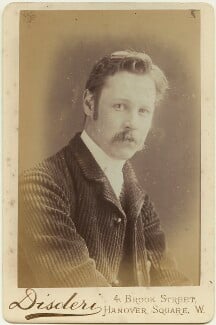
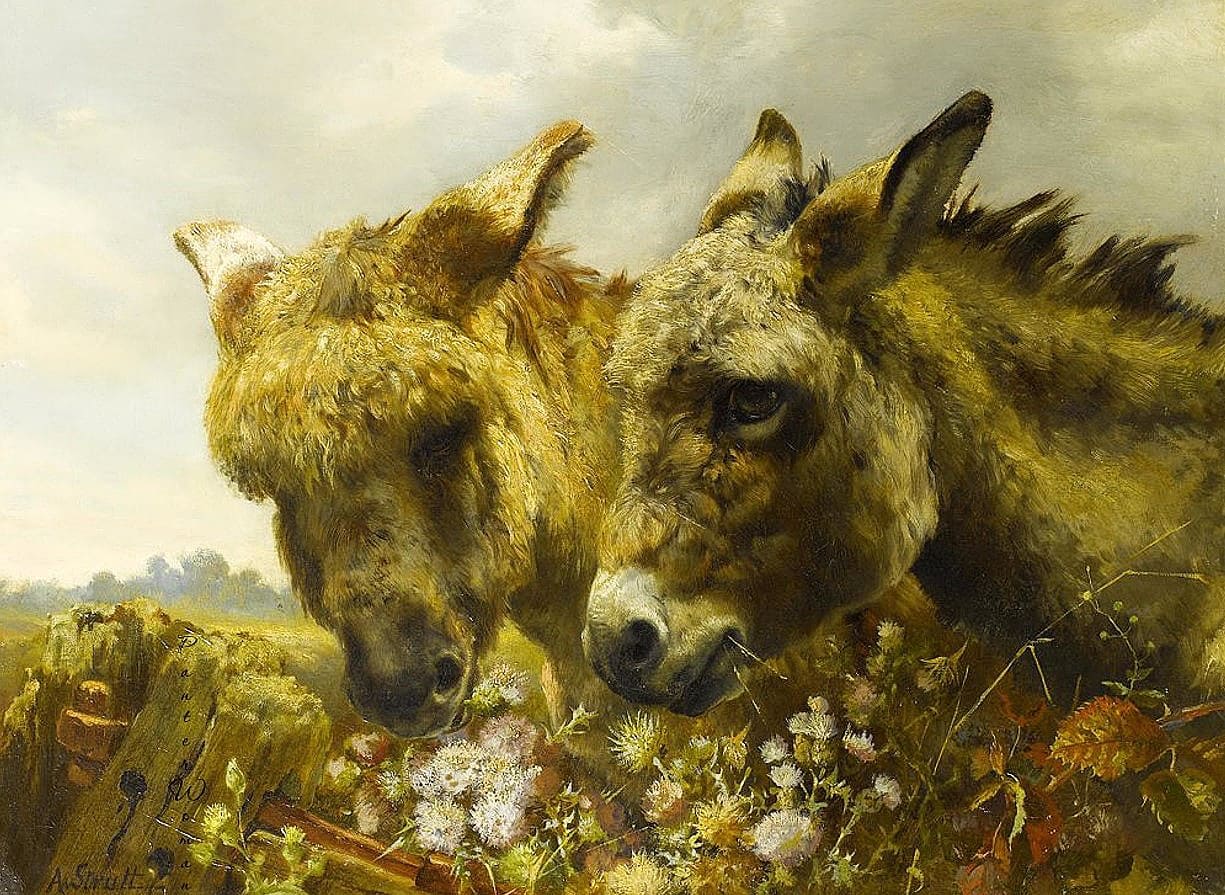
British artist ALFRED WILLIAM STRUTT (1856 - 1924) - PAINTINGS


https://collectionimages.npg.org.uk/std/mw115548/Alfred-William-Strutt.jpg


Alfred William Strutt was born in Tanaraki, New Zealand, the son of the English artist William Strutt (1825-1915). His grandfather was the miniaturist William Thomas Strutt (1777-1850) and his great-grandfather was Joseph Strutt (1742-1802) a social historian and artist. His sisters Rosa and Laura were also artists. His father had moved to Australia in 1850 and then to New Zealand in 1855, where he recorded the early days of the British colony.

Alfred and his family returned to England in 1862 where he studied at the South Kensington School of Art. He also received tuition from his father. Strutt began exhibiting at the Royal Academy from 1877 and also at the Royal Society of British Artists from around this date. He lived with his parents at 3 Bedford Place, Croydon during the late 1870’s before moving to Motyaden, near Staplehurst Kent from 1880. However, by 1884 he was back in London at Augustine Terrace, Brook Green, Kensington from where he kept a studio with his father.

In 1888, he became a member of the Royal Society of British Artists and an associate member of the Royal Society of Painters and Etchers in 1889. He was also a member of the Royal Cambrian Academy and the Royal British Colonial Society of Artists. He married Nellie Maria Ketchlee on 1 August 1891 and they moved to East Sussex where they lived at Rhosilli, Wadhurst, close to where his parents had moved. From around 1911, he lived at Afterglow, Best Beech Hill, Wadshurst. He died at Hammersmith Hospital on 8 March 1924.
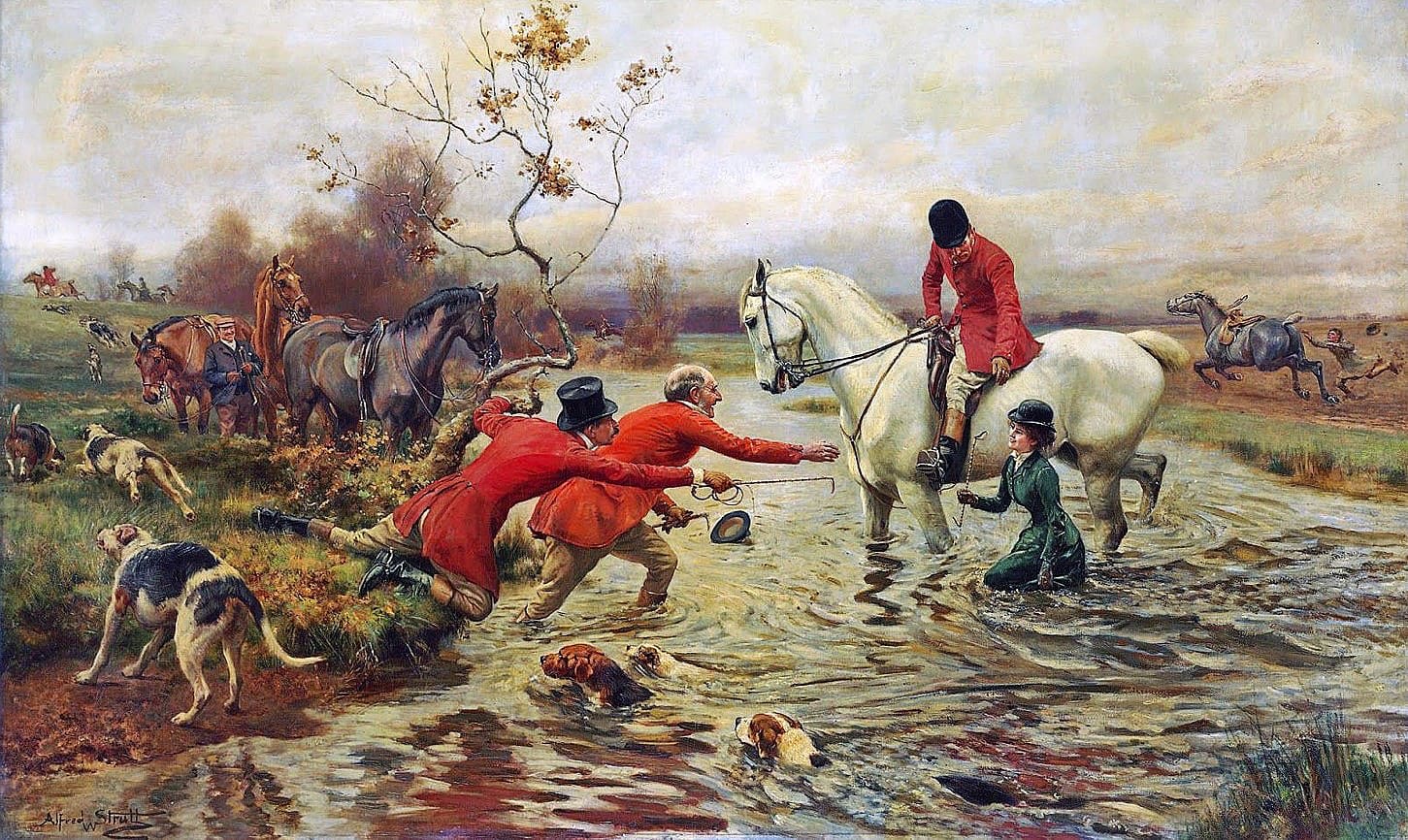
Like his father, he specialised in genre scenes, often including animals as well as sporting scenes. Strutt’s paintings are well executed and full of humour. In this particular painting he returns to one of his favourite subjects of hunters startling a lady in her carriage.


Thursday, September 17, 2020

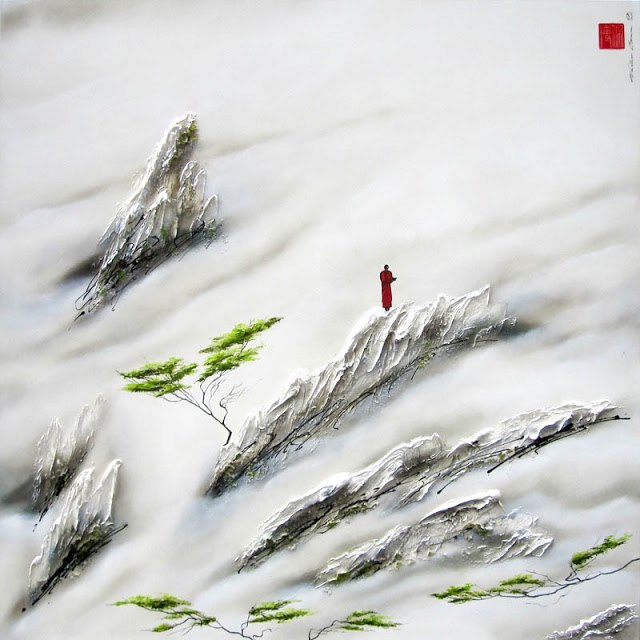
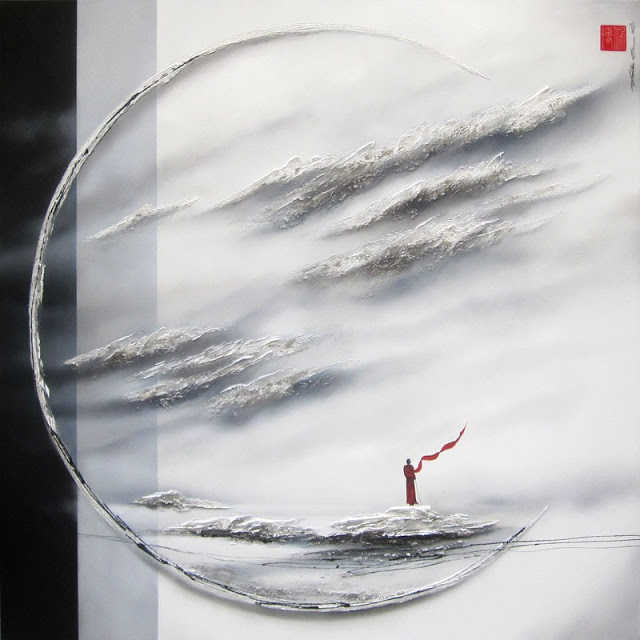
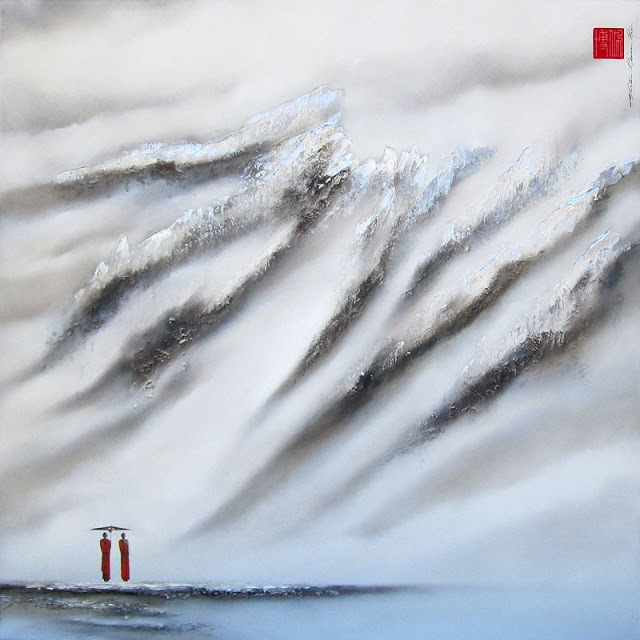
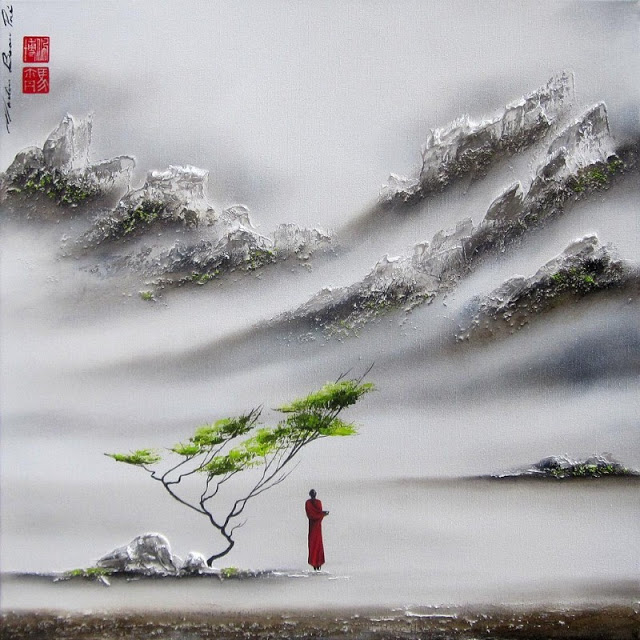
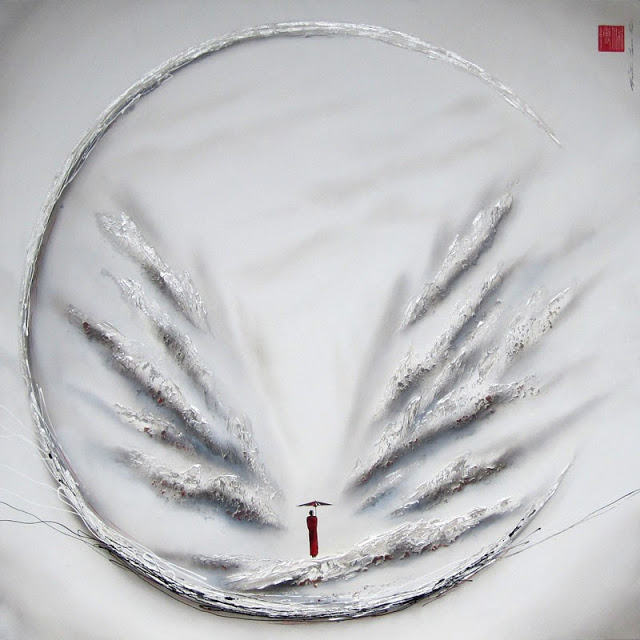
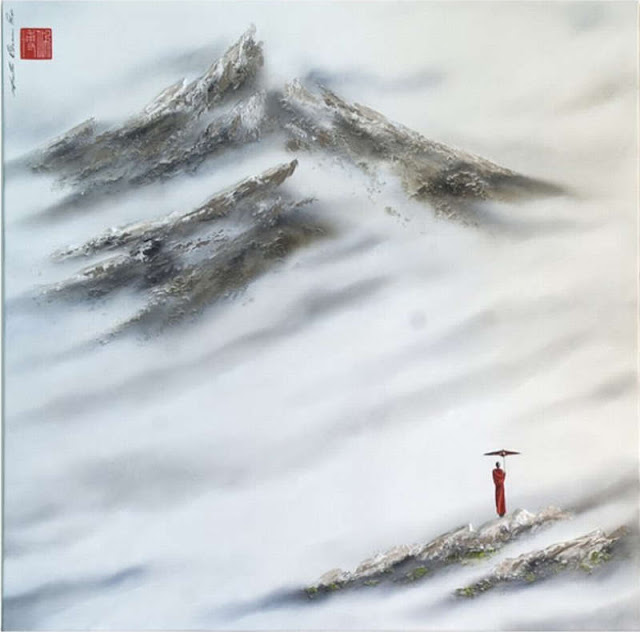
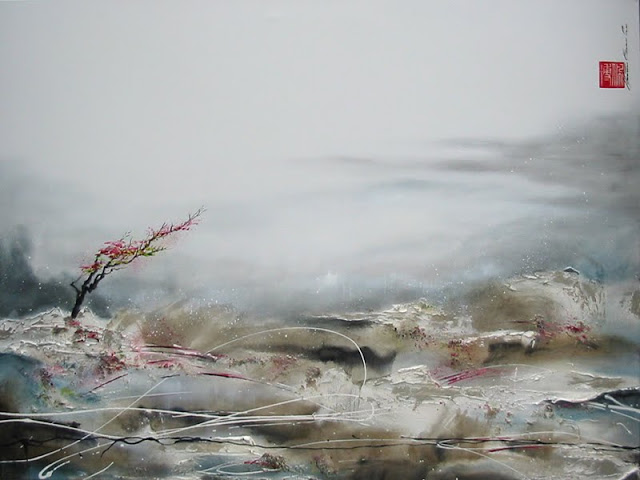
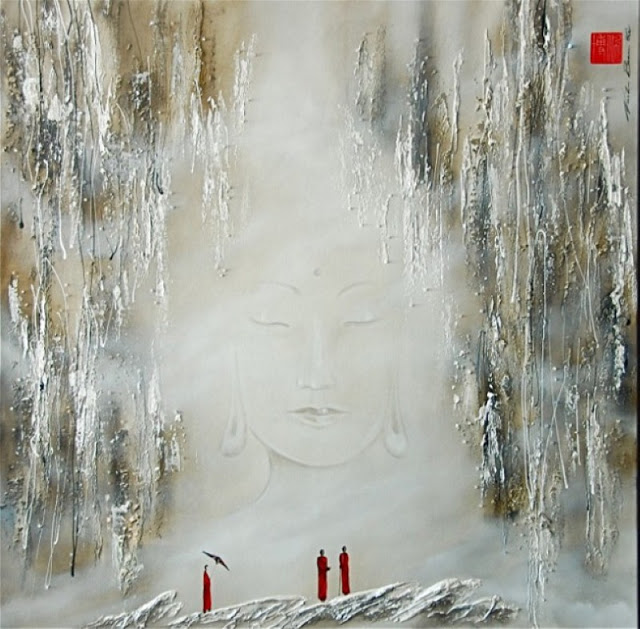
CALMNESS - MARTIN BEAUPRE - Canadian painter


An artist from Canada, Martin Beaupre, creates paintings saturated with tranquility, almost zen.

He uses oil paints to simulate sand, Swarovski crystals, and ink to achieve unique textures. 

Martin draws inspiration from his travels in Asia, primarily in Thailand and Japan. 

In his work, there is a reason for every detail, and nothing is left to chance. He strives to create maximum effect using a minimum of means, where the void can be decorated but cannot be filled. 

His work is filled with mountains, flowering cherry trees, geisha and monks.


Monday, August 10, 2020

LANDSCAPES IN THE PAINTING OF ARTISTS OF THE 18-20 CENTURIES


Carl  Schlesinger (1825 - 1893)


Antal  Berkes  (1874 - 1938)


Dedo  Camienke  (1840 - 1907)


Colestin  Brugner  (1824 - 1887)


Frederik  Lee  Brindell  (1831 - 1863)


Acsan  Lutteroth  (1842 - 1923)


Carl  georg  Koster  (1812 - 1893)


Herald  Julius  Pryn  (1891 - 1968)


Oswald  Romer  (1938 - 1998)


 Karl  Kaufmann  (  (1843 - 1901)


Sunday, June 28, 2020

DUTCH ARTIST REMBRANDT VAN RIJN AND HIS PAINTING "THE RETURN OF THE PRODIGAL SON".


https://a.radikal.ru/a18/2004/db/f559689cc7d8.jpg


Rembrandt painted his picture “The Return of the Prodigal Son” shortly before his death.
Some connoisseurs of painting call this canvas the culmination of his work.
But few people know that the famous biblical plot was a reflection of real tragic events in the life of the master.


Perhaps the biblical plot of the picture is known to everyone. The father had two sons. The eldest helped his father in housekeeping, and the youngest demanded his part of the inheritance and went to indulge in all the vices of a wild life. When the money ran out, the unlucky son was at the bottom. He had to graze pigs for a bowl of porridge, to wander, to beg. In the end, he decided to return to his father's house and fall on his knees in front of the parent. Father forgives son.


https://a.radikal.ru/a01/2004/ae/7a39b97e51e5.jpg

The return of the prodigal son  -   Rembrandt


This moment in the parable was chosen by the most famous painters. Rembrandt also depicted the scene of the arrival of the prodigal son home. However, his work differs from the canvases of other painters.


https://c.radikal.ru/c13/2004/37/0e5877ad91e4.jpg

The return of the prodigal son. -  painter Jan Steen, 1668-1670


If we compare the paintings of Rembrandt and other artists, their striking contrast becomes visible. For example, with Jan Steen, who was at one time much more popular than Rembrandt, the plot in the picture is the same, but made in a more optimistic way. Servants blow a horn, lead to stab a calf, carry good clothes.


https://c.radikal.ru/c40/2004/f7/cb166f04d980.jpg

The return of the prodigal son - painter Murillo, 1667-1670


https://c.radikal.ru/c03/2004/18/b9ed4ac64b04.jpg

The return of the prodigal son. - painter Rembrandt - detail


Rembrandt does not have all the extra attributes, he focused only on the emotions of  father and son. It would be more correct to say that the emotions on the face of the prodigal son are not visible, but his appearance and posture can say a lot. Torn clothes, worn shoes, corns on the feet - all this so deeply conveys the emotionality of the scene. And also love, the forgiving love of his father ...


The son of the artist, Titus, at his desk. - 1655.

https://c.radikal.ru/c43/2004/b5/9901d769eb53.jpg

Portrait of  Titus reading - Rembrandt

https://c.radikal.ru/c40/2004/f6/24f7b52adc79.jpg

Titus in the image of a monk. -  Rembrandt, 1660.

https://a.radikal.ru/a08/2004/c1/bc078c647f3d.jpg


“The Return of the Prodigal Son,” the master wrote almost immediately after the terrible tragedy that befell him. His only son Titus did not.

He was the fruit of the love of Rembrandt and his adored wife Saskia.


Saskia Van Eilenburg Rembrandt

https://c.radikal.ru/c20/2004/95/c790cccd54c3.jpg

Titus is the only surviving child in the family, the other three died in infancy but he died before his father - Rembrandt died a year later


Maddened by grief, his father persistently attended to thoughts of suicide. Only work on the painting “The Return of the Prodigal Son” helped not to commit it. Rembrandt as if projected himself to the place of the father in a biblical story, who had the good fortune to hug his child.