Showing posts with label RELIGION. Show all posts

Tuesday, January 5, 2021

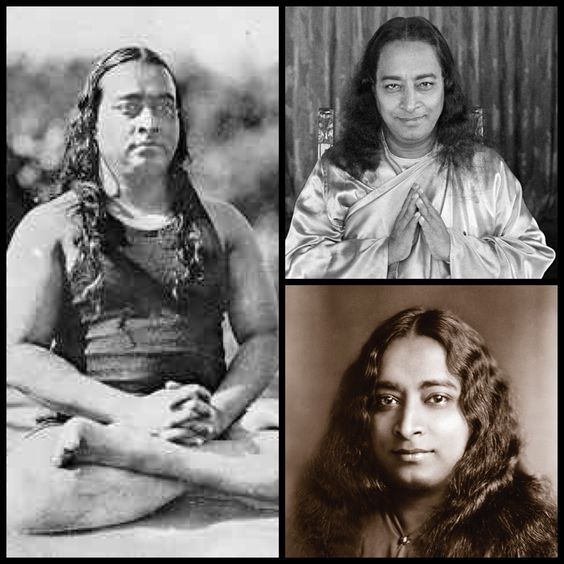
PARAMAHANSA YOGANANDA - POEMS (= short biography by Tejvan R. Pettinger )


Paramahansa Yogananda is one of the greatest spiritual figures of the twentieth century, and also was one of the first Spiritual Masters to bring the Yoga of the East to the aspiring West.

Yogananda was born in Gorakhpur, Bengal in 1893. Originally his name was Mukunda Lal Ghosh. He was given the name of Yogananda after his initiation as an Indian Swami (monk).

Yogananda means “Bliss” through yoga (divine union with God) The title “Paramahansa” was given by his Guru Sri Yukteswar . Paramahansa means literally “Supreme Swan”. It is given to Swami’s who have established constant communion with God.

From an early age Yogananda was fascinated with meeting spiritual Saints and seekers. His autobiography recounts many riveting occasions of meetings with different Saints, (including Master Mahasaya, who was the author of “The Gospel of Ramakrishna.” ) Even as a young child Yogananda spent many hours in meditation, aspiring to attain God – Consciousness.

At the age of 17 Yogananda became a disciple of Swami Sri Yukteswar who expertly guided him along the spiritual path. Sri Yukteswar was a direct disciple of Lahiri Mahasaya Lahiri Mahasaya is credited with reintroducing the ancient art of Kriya yoga into modern society.  After several years of strict spiritual training in his Masters hermitage, Yogananda was inspired to travel to America. With the blessings of his Guru Sri Yukteswar, Yogananda travelled to the West,  in order to share the spiritual traditions of India and his own inner realisations.

In America, Yogananda founded the Self Realization Fellowship, which served as the organisation committed to his teachings. Yogananda also  gave many lectures on spiritual themes throughout the country. Yogananda taught that although  outer customs of religion may be different, the underlying principles are the same. He also taught that the essence of any religion and spiritual practice was the Love of God and to realize the true nature of your own divine Self. Yogananda also did much to show the underlying unity between Hinduism and Christianity, in doing so he helped bridge the gap between East and West.  Less well know perhaps is the poetry of Yogananda. However books such as ‘Songs of the Soul’ and ‘Whispers from Eternity’ reflect the poetic vision of this great Spiritual Master.

During his life Yogananda was able to meet with many prominent spiritual, cultural and political figures. For example, during his period of running a school in India, he was able to meet the Bengali Nobel Prize winner Rabindranath Tagore. In the mid 1930s he was able to meet Mahatma Gandhi at his ashram in Wardha. His autobiography also tells of fascinating meetings with spiritual luminaries such as Sri Anandaymoyi Ma and Sri Ramana Maharshi. Yogananda was also the first Indian Swami to meet with a US President (C.Coolidge in 1927)

On March 7, 1952, Paramahansa Yogananda entered mahasamadhi,  leaving behind a profound spiritual legacy. His writings and life continue to give countless inspiration to many Truth – Seekers and God – Lovers.

biography by  Tejvan R. Pettinger


WHAT  IS  LOVE ?


Love is the scent with the lotus born.
It is the silent choirs of petals
Singing the winter’s harmony of uniform beauty.
Love is the song of the soul, singing to God.
It is the balanced rhythmic dance of planets –
sun and moon lit
In the skyey hall festooned with fleecy clouds –
Around the sovereign Silent Will.
It is the thirst of the rose to drink the sunrays
And blush red with life.
‘Tis the promptings of the mother earth
To feed her milk to the tender, thirsty roots,
And to nurse all life.
It is the urge of the sun
To keep all things alive.
Love is the unseen craving of the Mother Divine
That took the protecting father – form,
And that feeds helpless mouths
With milk of mother’s tenderness.
It is the babies’ sweetness,
Coaxing the rain of parental sympathy
To shower upon them.
It is the lover’s unenslaved surrender to the beloved
To serve and solace.
It is the elixir of friendship,
Reviving broken and bruised souls.
It is the martyr’s zeal to shed his blood
For the well-beloved fatherland.
It is the ineffable, silent call of the heart to another
heart.
It is the God-drunk poet’s heartaches
For every creature’s groans.
Love is to enjoy the family rose of petal-beings,
And thence to move to spacious fields –
Passing by portals of social, national, international
sympathy,
On to the limitless Cosmic Home –
To gaze with looks of wonderment,
And to serve all that lives, still or moving.
This is to know what love is.
He knows who lives it.
Love is evolution’s ameliorative call
To the far-strayed sons
To return to Perfection’s home.
It is the call of the beauty – robed ones
To worship the great Beauty.
It is the call of God
Through silent intelligences
And starburst of feelings.
Love is the Heaven
Toward which the flowers, rivers, nations, atoms,
creatures – you and I
Are rushing by the straight path of action right,
Or winding laboriously on error’s path,
All to reach haven there at last.


GOD   GOD   GOD

From the depth of slumber,
As I ascend the spiral stairway of wakefulness,
I whisper
God, God, God !

Thou art the food and when I break my fast
Of nightly separation from Thee
I taste thee and mentally say
God, God, God !

No matter where I go, the spotlight of my mind
Ever keeps turning on Thee;
And in the battle dim of activity my silent war cry
Is ever;
God, God, God!

When boisterous storms of trials shriek
And worries howl at me,
I drown their noises, loudly chanting
God, God, God !

When my mind weaves dreams
With treads of memories,
Then on that magic cloth I do emboss;
God, God, God !

Ever night, in time of deepest sleep,
My peace dreams and calls; Joy ! Joy ! Joy !
And my Joy comes singing evermore;
God, God, God !

In waking, eating, working, dreaming, sleeping,
Serving, meditating, chanting, divinely loving,
My soul constantly hums, unheard by any;
God, God, God!


ETERNITY

Eternity
Oh, will that day arrive
When I shall ceaselessly ask – yea, drive
Eternal questions into Thine ear,
O Eternity ! and have solution
How weak weeds grow and stand unbent,
Unshaken ‘neath the trampling current.
How the storm wrecks titanic things;
Uproots the trees,
And quick disturbs the mighty seas.
How the first spark blinked; how the first tree,
The first goldfish, the first bluebird so free,
And the first crooning baby,
Into this wonder-house to visit,
Made their grand entry.
They come, I see;
Their growth alone I watch.
Thy cosmic moulding Hand,
That secret works on land and sea,
I wish to seize,
O Eternity.


MY  SOUL  IS  MARCHING  ON  ! 


The shining stars are sunk in darkness deep,
The weary sun is dead at night,
The moon’s soft smile doth fade anon;
But still my soul is marching on!
The grinding wheel of time hath crushed
Full many a life of moon and star,
And many a brightly smiling morn;
But still my soul is marching on!
The flowers bloomed, then hid in gloom,
The bounty of the trees did cease;
Colossal men have come and gone,
But still my soul is marching on!
The aeons one by one are flying,
My arrows one by one are gone;
Dimly, slowly, life is fading,
But still my soul is marching on!
Darkness, death, and failures vied;
To block my path they fiercely tried.
My fight with jealous Nature’s strong,
But still my soul is marching on!


ONE  FRIEND


Many clouds do race to hide Thee 
Of friends and wealth and fame –
And yet through mist of tears I see
Appear Thy Golden Name.
Each time my father, mother, friends
Do loudly claim they did me tend,
I wake from sleep to sweetly hear
That Thou alone didst help me here.


SAMADHI  


Vanished are the veils of light and shade,
Lifted the vapors of sorrow,
Sailed away the dawn of fleeting joy,
Gone the mirage of the senses.
Love, hate, health, disease, life and death –
Departed, these false shadows on the screen
of duality.
Waves of laughter, scyllas of sarcasm, whirlpools
of melancholy,
Melting in the vast sea of bliss.
Bestilled is the storm of maya
By the magic wand of intuition deep.
The universe, a forgotten dream, lurks
subconsciously,
Ready to invade my newly wakened memory divine.
I exist without the cosmic shadow,
But it could not live bereft of me;
As the sea exists without the waves,
But they breathe not without the sea.
Dreams, wakings, states of deep turiya sleep,
Present, past, future, no more for me,
But the ever-present, all-flowing, I, I everywhere.
Consciously enjoyable,
Beyond the imagination of all expectancy,
Is this, my samadhi state.
Planets, stars, stardust, earth,
Volcanic bursts of doomsday cataclysms,
Creation’s moulding furnace,
Glaciers of silent X-rays,
Burning floods of electrons,
Thoughts of all men, past, present, future,
Every blade of grass, myself and all,
Each particle of creation’s dust,
Anger, greed, good, bad, salvation, lust,
I swallowed up – transmuted them
Into one vast ocean of blood of my own one Being!
Smoldering joy, oft-puffed by unceasing meditation,
Which blinded my tearful eyes,
Burst into eternal flames of bliss,
And consumed my tears, my peace, my frame,
my all.
Thou art I, I am Thou,
Knowing, Knower, Known, as One!
One tranquilled, unbroken thrill of eternal, living, ever-new peace!
Not an unconscious state
Or mental chloroform without wilful return,
Samadhi but extends my realm of consciousness
Beyond the limits of my mortal frame
To the boundaries of eternity,
Where I, the Cosmic Sea,
Watch the little ego floating in Me.
Not a sparrow, nor a grain of sand, falls
without my sight
All space floats like an iceberg in my mental sea.
I am the Colossal Container of all things made!
By deeper, longer, continuous, thirsty,
guru – given meditation,
This celestial samadhi is attained.
All the mobile murmurs of atoms are heard;
The dark earth, mountains, seas are molten liquid!
This flowing sea changes into vapors of nebulae!
Aum blows o’er the vapors; they open their veils,
Revealing a sea of shining electrons,
Till, at the last sound of the cosmic drum,
Grosser light vanishes into eternal rays
Of all-pervading Cosmic Joy.
From Joy we come,
For Joy we live,
In the sacred Joy we melt.
I, the ocean of mind, drink all creation’s waves.
The four veils of solid, liquid, vapor, light,
Lift aright.
Myself, in everything,
Enters the Great Myself.
Gone forever,
The fitful, flickering shadows of a mortal memory.
Spotless is my mental sky,
Below, ahead, and high above.
Eternity and I, one united ray.
I, a tiny bubble of laughter,
Have become the Sea of Mirth Itself.


NATURE'S  NATURE  


Away, ye muses, all away!
Away with songs of finch and fay.
Away the jaundiced sight
That magnifies the firefly’s light
To bonfire bright;
That sets ablaze at once
My musing’s dimly burning lamps;
That ornaments with rhymes
The penury-stricken looks betimes;
That over-clothes the logic – lord
With fancy – swollen words.
Away, the partial love
That ‘boldens Nature to sit above
Her Maker!
This day I fasten eyelid doors,
With absence wax my ears,
With languorous peace congeal
My tongue, my touch, my tears *
That I within may pore
Upon the things behind, ahead,
In the darkness round me spread.
I lock Dame Nature out
With all her fickle rout.
Somewhere here,
In the darkness drear,
I myself with cheer
My course will steer
In the path
E’er sought by all:
Its magnet call
I hear.
Not hear, not here,
Apollo would his burning chariot steer;
Nor Diana dare to peep
Into the sacred silence deep.
Not here, not here,
Not far or near
Can mounts or rebel waves
E’er make me full of fear;
Nor evermore
Their dreadful grandeur to adore.
Not here, not here
The soft capricious wiles of flowers;
Nor swarming storm clouds’ sweeping terror,
Dishevelling the trees
And light-haired skies;
Nor doomsday’s thunderous roar,
Dismantling earth and stars-
The cosmic beauties all to mar –
Not Nature’s murderous mutiny,
Nor man’s exploding destiny
Can touch me here.
Not here, not here:
Through mind’s strong iron bars,
Not gods or goblins, men or nature,
Without my pass dare enter.
I look behind, ahead –
On naught but darkness tread.
In wrath I strike, and set the dark ablaze
With the immortal spark of thought,
By friction-process brought
Of concentration
And distraction.
The darkness burns
With a million tongues;
And now I spy
All past, all distant things, as nigh.
I smile serene
As I expose to gaze.
In wisdom’s brilliant blaze,
All charms of the Hidden Home Unseen:
The Home of Nature’s birth,
The planets’ moulding hearth,
The factory whence all forms or fairies start,
The bards, colossal minds, and hearts,
The gods and all,
And all, and all!
Away, away
With all the lightsome lays!
Oh, now will I portray
In humble way,
And try to lisp, if only in half truths,
Of wordless charms of Thee Unseen,
To whom Dame Nature owes her nature
and her sheen.




Tuesday, December 1, 2020

SAINT NICHOLAS - - by Amy Steedman from "In God's Garden - Stories of the Saints for Little Children"


Of all the saints that little children love is there any to compare with Santa Claus? The very sound of his name has magic in it, and calls up visions of well-filled stockings, with the presents we particularly want peeping over the top, or hanging out at the side, too big to go into the largest sock. Besides, there is something so mysterious and exciting about Santa Claus, for no one seems to have ever seen him. But we picture him to ourselves as an old man with a white beard, whose favourite way of coming into our rooms is down the chimney, bringing gifts for the good children and punishments for the bad.

Yet this Santa Claus, in whose name the presents come to us at Christmas time, is a very real saint, and we can learn a great deal about him, only we must remember that his true name is Saint Nicholas. Perhaps the little children, who used to talk of him long ago, found Saint Nicholas too difficult to say, and so called him their dear Santa Claus. But we learn, as we grow older, that Nicholas is his true name, and that he is a real person who lived long years ago, far away in the East.

The father and mother of Nicholas were noble and very rich, but what they wanted most of all [85]was to have a son. They were Christians, so they prayed to God for many years that he would give them their heart's desire; and when at last Nicholas was born, they were the happiest people in the world.

They thought there was no one like their boy; and indeed he was wiser and better than most children, and never gave them a moment's trouble. But alas, while he was still a child, a terrible plague swept over the country, and his father and mother died, leaving him quite alone.

All the great riches which his father had possessed were left to Nicholas, and among other things he inherited three bars of gold. These golden bars were his greatest treasure, and he thought more of them than all the other riches he possessed.

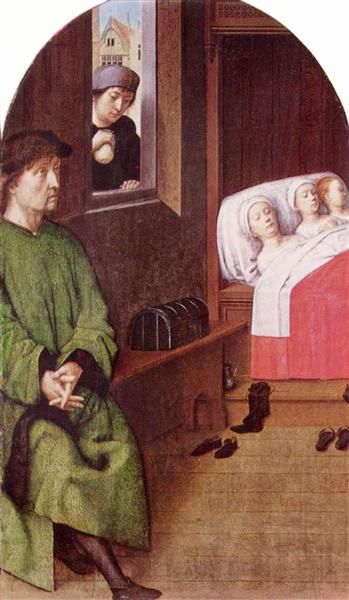
Now in the town where Nicholas lived there dwelt a nobleman with three daughters. They had once been very rich, but great misfortunes had overtaken the father, and now they were all so poor they had scarcely enough to live upon.

At last a day came when there was not even bread enough to eat, and the daughters said to their father:

'Let us go out into the streets and beg, or do anything to get a little money, that we may not starve.'

But the father answered:

'Not to-night. I cannot bear to think of it. Wait at least until to-morrow. Something may happen to save my daughters from such disgrace.'

Now, just as they were talking together, Nicholas happened to be passing, and as the window was open he heard all that the poor father said. It seemed terrible to think that a noble family should be so poor and actually in want of bread, and Nicholas tried to plan how it would be possible to help them. He knew they would be much too proud to take money from him, so he had to think of some other way. Then he remembered his golden bars, and that very night he took one of them and went secretly to the nobleman's house, hoping to give the treasure without letting the father or daughters know who brought it.

To his joy Nicholas discovered that a little window had been left open, and by standing on tiptoe he could just reach it. So he lifted the golden bar and slipped it through the window, never waiting to hear what became of it, in case any one should see him. (And now do you see the reason why the visits of Santa Claus are so mysterious?)

Inside the house the poor father sat sorrowfully watching, while his children slept. He wondered if there was any hope for them anywhere, and he prayed earnestly that heaven would send help. Suddenly something fell at his feet, and to his amazement and joy, he found it was a bar of pure gold.

'My child,' he cried, as he showed his eldest daughter the shining gold, 'God has heard my prayer and has sent this from heaven. Now we shall have enough and to spare. Call your sisters that we may rejoice together, and I will go instantly and change this treasure.

The precious golden bar was soon sold to a money-changer, who gave so much for it that the family were able to live in comfort and have all that they needed. And not only was there enough to live upon, but so much was over that the father gave his eldest daughter a large dowry, and very soon she was happily married.

When Nicholas saw how much happiness his golden bar had brought to the poor nobleman, he determined that the second daughter should have a dowry too. So he went as before and found the little window again open, and was able to throw in the second golden bar as he had done the first. This time the father was dreaming happily, and did not find the treasure until he awoke in the morning. Soon afterwards the second daughter had her dowry and was married too.

The father now began to think that, after all, it was not usual for golden bars to fall from heaven, and he wondered if by any chance human hands had placed them in his room. The more he thought of it the stranger it seemed, and he made up his mind to keep watch every night, in case another golden bar should be sent as a portion for his youngest daughter.

And so when Nicholas went the third time and dropped the last bar through the little window, the father came quickly out, and before Nicholas had time to hide, caught him by his cloak.

'O Nicholas,' he cried, 'is it thou who hast helped us in our need? Why didst thou hide thyself?' And then he fell on his knees and began to kiss the hands that had helped him so graciously.

But Nicholas bade him stand up and give thanks [88]to God instead; warning him to tell no one the story of the golden bars.

This was only one of the many kind acts Nicholas loved to do, and it was no wonder that he was beloved by all who knew him.

Soon afterwards Nicholas made up his mind to enter God's service as a priest. He longed above all things to leave the world and live as a hermit in the desert, but God came to him in a vision and told him he must stay in the crowded cities and do his work among the people. Still his desire to see the deserts and the hermits who lived there was so great that he went off on a journey to Egypt and the Holy Land. But remembering, what God had bade him do, he did not stay there, but returned to his own country.

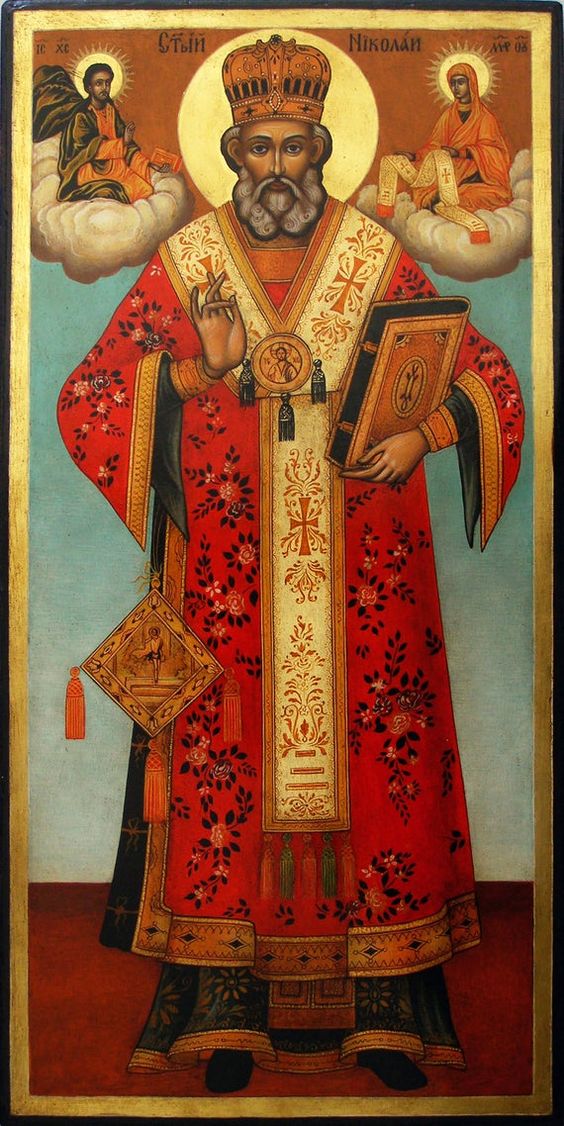
Sfântul Ierarh Nicolae, Arhiepiscopul de Mira Lichiei


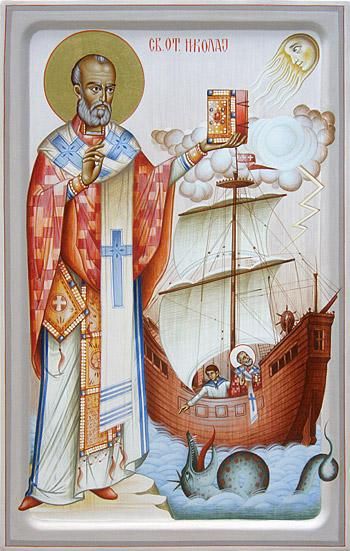
On the way home a terrific storm arose, and it seemed as if the ship he was in must be lost. The sailors could do nothing, and great waves dashed over the deck, filling the ship with water. But just as all had given up hope, Nicholas knelt and prayed to God to save them, and immediately a calm fell upon the angry sea. The winds sank to rest and the waves ceased to lash the sides of the ship so that they sailed smoothly on, and all danger was past.

Thus Nicholas returned home in safety, and went to live in the city of Myra. His ways were so quiet and humble that no one knew much about him, until it came to pass one day that the Archbishop of Myra died. Then all the priests met to choose another archbishop, and it was made known to them by a sign from heaven that the first man who should enter the church next morning should be the bishop whom God had chosen.

Now Nicholas used to spend most of his nights in prayer and always went very early to church, so next morning just as the sun was rising and the bells began to ring for the early mass, he was seen coming up to the church door and was the first to enter. As he knelt down quietly to say his prayers as usual, what was his surprise to meet a company of priests who hailed him as their new archbishop, chosen by God to be their leader and guide. So Nicholas was made Archbishop of Myra to the joy of all in the city who knew and loved him.

Not long after this there was great trouble in the town of Myra, for the harvests of that country had failed and a terrible famine swept over the land. Nicholas, as a good bishop should, felt the suffering of his people as if it were his own, and did all he could to help them.

He knew that they must have corn or they would die, so he went to the harbour where two ships lay filled with grain, and asked the captains if they would sell him their cargo. They told the bishop they would willingly do so, but it was already sold to merchants of another country and they dared not sell it over again.

'Take no thought of that,' said Nicholas, 'only sell me some of thy corn for my starving people, and I promise thee that there shall be nought wanting when thou shalt arrive at thy journey's end.'

The captains believed in the bishop's promise and gave him as much corn as he asked. And behold! when they came to deliver their cargo to the owners, there was not a bag lacking.

It is said, too, that at the time of this famine there was a cruel innkeeper in Myra who was wicked enough to catch little children and pickle them in a great tub, pretending they were pork. It happened one day as Nicholas was passing the inn-door that he heard the voices of children crying for help. He went in very quickly and made his way to the cellar whence the cries had come. There he found the poor children, and not only rescued those who were alive, but by his prayers he brought to life those who had already been killed and cast into the tub.

Another time there were two men in Myra who had been unjustly condemned to death, and it was told the bishop how greatly they stood in need of his help. No one ever appealed to Nicholas in vain, and he went off at once to the place of execution. The executioner was just about to raise his sword, when Nicholas seized his arm and wrenched the sword away. Then he set the poor prisoners free and told the judge that, if he dared to deal so unjustly again, the wrath of heaven and of the Bishop of Myra would descend upon him.

There are many other stories told about the good bishop. Like his Master, he ever went about doing good; and when he died, there were a great many legends told about him, for the people loved to believe that their bishop still cared for them and would come to their aid. We do not know if all these legends are true, but they show how much Saint Nicholas was loved and honoured even after his death, and how every one believed in his power to help them.

Here is one of the stories which all children who love Saint Nicholas will like to hear.

There was once a nobleman who had no children and who longed for a son above everything else in the world. Night and day he prayed to Saint Nicholas that he would grant him his request, and at last a son was born. He was a beautiful child, and the father was so delighted and so grateful to the saint who had listened to his prayers that, every year on the child's birthday, he made a great feast in honour of Saint Nicholas and a grand service was held in the church.

Now the Evil One grew very angry each year when this happened, for it made many people go to church and honour the good saint, neither of which things pleased the Evil One at all. So each year he tried to think of some plan that would put an end to these rejoicings, and he decided at last that if only he could do some evil to the child, the parents would blame Saint Nicholas and all would be well.

It happened just then to be the boy's sixth birthday, and a greater feast than ever was being held. It was late in the afternoon, and the gardener and porter and all the servants were away keeping holiday too. So no one noticed a curious-looking pilgrim who came and sat close to the great iron gates which led into the courtyard. He had on the ordinary robe of a poor pilgrim, but the hood was drawn so far over his face that nothing but a dark shadow could be seen inside. And indeed that was as well, for this pilgrim was a demon in disguise, and his wicked, black face would have frightened any one who saw it. He could not enter the courtyard for the great gates were always kept locked, and, as you know, the porter was away that day, feasting with all the other servants.

But, before very long, the little boy grew weary of his birthday feast, and having had all he wanted, he begged to be allowed to go to play in the garden. His parents knew that the gardener always looked after him there, so they told him he might go. They forgot that the gardener was not there just then.

The child played happily alone for some time and then wandered into the courtyard, and looking out of the gate saw a poor pilgrim resting there.

'What are you doing here?' asked the child, 'and why do you sit so still?'

'I am a poor pilgrim,' answered the demon, trying to make his harsh voice sound as gentle as possible, 'and I have come all the way from Rome. I am resting here because I am so weary and footsore and have had nothing to eat all day.'

'I will let you in, and take you to my father,' said the child; 'this is my birthday, and no one must go hungry to-day.'

But the demon pretended he was too weak to walk, and begged the boy to bring some food out to him.


Then the child ran back to the banquet hall in a great hurry and said to his father:

'O father, there is a poor pilgrim from Rome sitting outside our gate, and he is so hungry, may I take him some of my birthday feast?'

The father was very pleased to think that his little son should care for the poor and wish to be kind, so he willingly gave his permission and told one of the servants to give the child all that he wanted.

Then as the demon sat eating the good things, he began to question the boy and tried to find out all that he could about him.

'Do you often play in the garden?' he asked.

'Oh yes,' said the child, 'I play there whenever I may, for in the midst of the lawn there is a beautiful fountain, and the gardener makes me boats to sail on the water.'

'Will he make you one today?' asked the demon quickly.

'He is not here to-day,' answered the child, 'for this is a holiday for every one and I am quite alone.'

Then the demon rose to his feet slowly and said he felt so much better after the good food, that he thought he could walk a little, and would like very much to come in and see the beautiful garden and the fountain he had heard about.

So the child climbed up and with great difficulty drew back the bolts. The great gates swung open and the demon walked in.

As they went along together towards the fountain, the child held out his little hand to lead the pilgrim, but even the demon shrunk from touching [94]anything so pure and innocent, and folded his arms under his robe, so that the child could only hold by a fold of his cloak.

'What strange kind of feet you have,' said the child as they walked along; 'they look as if they belonged to an animal.'

'Yes, they are curious,' said the demon, 'but it is just the way they are made.'

Then the child began to notice the demon's hands, which were even more curious than his feet, and just like the paws of a bear. But he was too courteous to say anything about them, when he had already mentioned the feet.

Just then they came to the fountain, and with a sudden movement the demon threw back his hood and showed his dreadful face. And before the child could scream he was seized by those hairy hands and thrown into the water.

But just at that moment the gardener was returning to his work and saw from a distance what had happened. He ran as fast as he could, but he only got to the fountain in time to see the demon vanish, while the child's body was floating on the water. Very quickly he drew him out, and carried him, all dripping wet, up to the castle, where they tried to bring him back to life. But alas! it all seemed of no use, he neither moved nor breathed; and the day that had begun with such rejoicing, ended in the bitterest woe. The poor parents were heart-broken, but they did not quite lose hope and prayed earnestly to Saint Nicholas who had given them the child, that he would restore their boy to them again.

As they prayed by the side of the little bed where the body of the child lay, they thought something moved, and to their joy and surprise the boy opened his eyes and sat up, and in a short time was as well as ever.

They asked him eagerly what had happened, and he told them all about the pilgrim with the queer feet and hands, who had gone with him to the fountain and had then thrown back his hood and shown his terrible face. After that he could remember nothing until he found himself in a beautiful garden, where the loveliest flowers grew. There were lilies like white stars, and roses far more beautiful than any he had ever seen in his own garden, and the leaves of the trees shone like silver and gold. It was all so beautiful that for a while he forgot about his home, and when he did remember and tried to find his way back, he grew bewildered and did not know in what direction to turn. As he was looking about, an old man came down the garden path and smiled so kindly upon him that he trusted him at once. This old man was dressed in the robes of a bishop, and had a long white beard and the sweetest old face the child had ever seen.

'Art thou searching for the way home?' the old man asked. 'Dost thou wish to leave this beautiful garden and go back to thy father and mother?'

'I want to go home,' said the child, with a sob in his voice, 'but I cannot find the way, and I am, oh, so tired of searching for it!'

Then the old man stooped down and lifted him in his arms, and the child laid his head on the old man's shoulder, and, weary with his wandering, fell fast asleep and remembered nothing more till he woke up in his own little bed.

Then the parents knew that Saint Nicholas had heard their prayers and had gone to fetch the child from the Heavenly Garden and brought him back to them.

So they were more grateful to the good saint than ever, and they loved and honoured him even more than they had done before; which was all the reward the demon got for his wicked doings.

That is one of the many stories told after the death of Saint Nicholas, and it ever helped and comforted his people to think that, though they could no longer see him, he would love and protect them still.

Young maidens in need of help remembered the story of the golden bars and felt sure the good saint would not let them want. Sailors tossing on the stormy waves thought of that storm which had sunk to rest at the prayer of Saint Nicholas. Poor prisoners with no one to take their part were comforted by the thought of those other prisoners whom he had saved. And little children perhaps have remembered him most of all, for when the happy Christmas time draws near, who is so much in their thoughts as Saint Nicholas, or Santa Claus, as they call him? Perhaps they are a little inclined to think of him as some good magician who comes to fill their stockings with gifts, but they should never forget that he was the kind bishop who, in olden days, loved to make the little ones happy. There are some who think that even now he watches over and protects little children, and for that reason he is called their patron saint.

Dos leyendas de San Nicolás


Saturday, October 31, 2020

HOW TO PRAY THE ROSARY - An excerpt from The Rosary Handbook by Mitch Finley.


How to Pray the Rosary


If you’ve never prayed the Rosary before, this article will give you the basics; and, if you’re returning to the Rosary after a long time away, you can use this article as a "refresher course." Keep in mind, though, that there are no "Rosary police" checking up on you to make sure that you’re doing it "the right way."


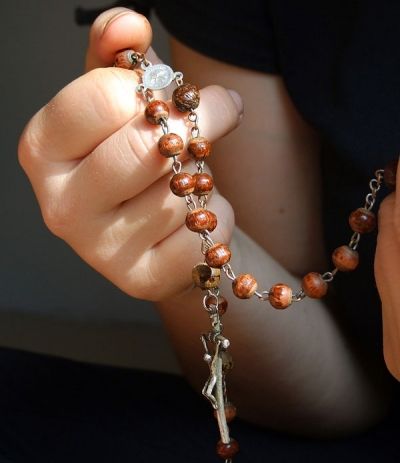
https://images.squarespace-cdn.com/content/v1/57f874e8440243944ef66aa7/1588056576305-5YHNGFCK4J473KBWH27L/ke17ZwdGBToddI8pDm48kKO0FitUsz_5k0FzDkTn4LJZw-zPPgdn4jUwVcJE1ZvWEtT5uBSRWt4vQZAgTJucoTqqXjS3CfNDSuuf31e0tVGuvNXTAJtO7WSz5hO71cF7p-7KlaO7X_57fhs1AgXWnCWdLZia3lhgEeidLXexKFM/Rosary.jpg


 In the long run, you may pray the Rosary however you prefer to pray it. The main objective of the Rosary is the same as any method of prayer, to nourish your intimacy with the triune God and with the communion of saints in this world and the next. So whatever serves that purpose is good.

If you want to pray the Rosary in the customary manner, however, there is a traditional way to go about it. The prayers of the Rosary will be provided here, in case you don’t already know them.

Because praying the Rosary involves repetitive prayer, it’s a good idea to have a rosary. If you don’t have a religious goods store in your area, you can find several sources on the Internet, some of which even offer free rosaries.

There are two basic ways to pray the Rosary, alone or with one or more people. If you are praying the Rosary with others, the custom is for one person to lead the group, primarily by saying the first half of each prayer and announcing each of the mysteries. 

For simplicity’s sake, we’ll assume here that you are praying the Rosary by yourself. If you join a group, most likely many of those present will understand how to pray the Rosary as a group, so all you’ll need to do is follow along. 

When praying the Rosary alone, you may either recite the prayers aloud or say them silently - it’s up to you.

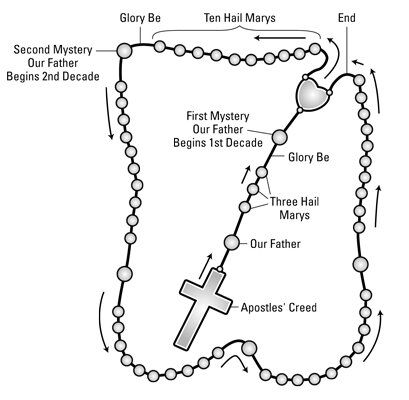
The rosary consists of six Our Father beads and five decades (sets of ten) Hail Mary Beads plus one set of three Hail Mary beads. The Apostles’ Creed is said on the crucifix, and the Glory Be is said on the chain or knot after each set of Hail Marys. The Hail, Holy Queen is said at the end of the Rosary. Here’s how to go about it. You may be surprised when you see how easy it really is: 

MAKE THE SIGN OF THE CROSS 

You begin the Rosary by making the sign of the cross using the small crucifix on the rosary. Simply hold the crucifix on your rosary with your fingers and trace the sign of the cross on your forehead, your chest, and then your left and right shoulders while saying,

In the name of the Father [forehead], and of the Son [chest], and of the Holy [left shoulder] Spirit [right shoulder]. Amen.

Say the Apostles’ Creed

Still holding the crucifix, pray the Apostles’ CREED:

I believe in God, the Father almighty, Creator of heaven and earth, and in Jesus Christ, his only Son, our Lord, who was conceived by the Holy Spirit, born of the Virgin Mary, suffered under Pontius Pilate, was crucified, died, and was buried. He descended into hell. The third day he rose again from the dead. He ascended into heaven and is seated at the right hand of the Father. From thence he shall come to judge the living and the dead. I believe in the Holy Spirit, the holy Catholic Church, the communion of saints, the forgiveness of sins, the resurrection of the body, and life everlasting. Amen.

Say the OUR FATHER 

Holding the first bead of your rosary (the bead closest to the crucifix), pray the Our Father:

Our Father, who art in heaven, hallowed be thy name. Thy kingdom come. Thy will be done, on earth as it is in heaven. Give us this day our daily bread. And forgive us our trespasses as we forgive those who trespass against us. And lead us not into temptation but deliver us from evil. Amen.

(If you came, or are coming, to Catholicism from a Protestant tradition, remember that Catholics say a doxology - "For the kingdom, and the power, and the glory are yours now and forever" - only in the context of the Mass, and then it is separated from the Our Father by a prayer said by the priest.)

Say Three HAIL MARY's

Next, hold each of the three beads in the next series one at a time, and pray a Hail Mary for each bead:

Hail, Mary, full of grace, the Lord is with thee (you). Blessed art thou (are you) among women, and blessed is the fruit of thy (your) womb, Jesus. Holy Mary, mother of God, pray for us sinners, now and at the hour of our death. Amen.

Say the GLORY BE / DOXOLOGY 

Holding the chain or knot that comes after the series of three Hail Mary beads, pray the Glory Be:

Glory be to the Father, and to the Son, and to the Holy Spirit. As it was in the beginning, it is now and ever shall be, world without end. (now and forever.) Amen.

If you like, you can say the following lines at the end of each Glory Be:

O my Jesus, forgive us our sins, save us from the fires of hell, and lead all souls to heaven, especially those in most need of thy (your) mercy. Amen.

It’s up to you whether you use this prayer, or not. If it appeals to you, go ahead and say it. If not, skip it.

SAY THE FIVE DECADES 

The next set of prayers, consisting of an OUR FATHER, 10 (ten) HAIL MARY's , and a GLORY BE - is repeated five times, once for each mystery of the Rosary. While holding the next, single bead, announce the first mystery of the kind you are praying today - joyful, sorrowful, glorious, or luminous. 

For example, "The first joyful mystery, the annunciation." Theoretically, the idea is to meditate or reflect upon this mystery while praying an Our Father, ten Hail Marys, and a Glory Be. If you can do that, great. If not, don’t worry about it. Personally, I suspect that the repetitive nature of the Rosary actually short-circuits conscious reflection on anything - let alone a mystery of faith - and acts something like a mantra does in the meditation methods of Zen Buddhism. 

The Rosary gives the fingers and tongue something to do, so that your mind and heart can "go deep," as it were, in wordless prayer.

After announcing the first mystery, and still holding the single bead, pray the Our Father. 

For each of the ten beads in the first decade of the Rosary, say one Hail Mary. 

When you reach the chain or knot after the tenth Hail Mary bead, say one Glory Be. 

Then hold the next single bead, announce the next mystery, say an Our Father, say the next set of ten Hail Marys, and say another Glory Be. 

Do this until you finish all five decades.

Say the HAIL, HOLY QUEEN / SALVE REGINA 

When you have completed the fifth decade of the Rosary and said the final Glory Be, say the HAIL, HOLY QUEEN :

Hail, Holy Queen, Mother of Mercy, our life, our sweetness, and our hope! To thee (you) do we cry, poor banished children of Eve; (the children of Eve;) to thee (you) do we send up our sighs, mourning and weeping in this vale (valley) of tears. (in this land of exile.) Turn then, most gracious advocate, thine (your) eyes of mercy toward us; and after this our exile, (lead us home at last and) show unto us the blessed fruit of thy (your) womb, Jesus. O clement, O loving, O sweet Virgin Mary. 

If you wish, you may also add this final verse-and-response prayer:

V: Pray for us, O holy mother of God,

R: That we may be made worthy of the promises of Christ.

And that’s it. That’s all there is to praying the Rosary. After you have prayed the Rosary a few times, you’ll know how easy it is. The more you pray the Rosary, however, the deeper you’ll get into it and the more you’ll discover its spiritual riches.