Showing posts with label INSPIRATIONAL. Show all posts

Monday, February 15, 2021

ENCOURAGEMENT IS... - by Catherine Pulsifer


ENCOURAGEMENT  IS...

by  Catherine Pulsifer 
 

Encouragement is . . .

the person who takes the time to listen
the person who supports you while others turn their back
the person who lends that helping hand
the person who has faith in you to be all you can
the person who shares what they have
the person who has confidence in you and your plans
the person who gives you hope to see the project through
the person who listens and does not judge

Encouragement you see is not a noun
but a person taking action showing kindness and compassion.


Friday, December 18, 2020

STRIVING - by Meredith Nicholson


STRIVING

by  Meredith  Nicholson


It  is not much that I can do.
My hands are weak.
The lines they draw seem never true;
The works I speak
Are not the ones I long to say,
I speak not prayers I long to pray.


It is no coward spirit, no
I try to learn
How others bravely strive and go
Rewards to earn,
And yet success is never mine
I labor on a false design.


They are not much, these little things
That form my task,
Yet constant seeking never brings
What I would ask,
And of what use is life to one
Who never knew a victory won ?


But this one thing I know, that He
Who guides the stars
Will look in charity on me
And see the scars
Which show that I have tried to trace
A path that weeds could not efface.


Tuesday, November 24, 2020

A CURIOUS INSTRUMENT - by Jane Taylor


A gentleman, just returned from a journey to London, was surrounded by his children eager, after the first salutations were over, to hear the news; and still more eager to see the contents of a small portmanteau, which were one by one carefully unfolded and displayed to view. After distributing among them a few small presents, the father took his seat again, saying that he must confess he had brought from town, for his own use, something far more curious and valuable than any of the little gifts they had received. It was, he said, too good to present to any of them; but he would, if they pleased, first give them a brief description of it, and then perhaps they might be allowed to inspect it.

The children were accordingly all attention, while the father thus proceeded: "This small instrument is made in the most perfect and wonderful way, and everything about it is very delicate and beautiful. Because of its extreme delicacy it is so liable to injury that a sort of light curtain, adorned with a beautiful fringe, is always provided, and so placed as to fall in a moment on the approach of the slightest danger. Its external appearance is always more or less beautiful, although in this respect there is a great diversity in the different sorts. If you should examine the inside you would find them all alike, but it is so curious, and its powers so truly astonishing, that no one who considers it can suppress his surprise and admiration. By a slight and momentary movement, which is easily made by the person it belongs to, you can ascertain with considerable accuracy the size, color, shape, weight, and value of any article whatever. A person having one is thus saved from the necessity of asking a thousand questions, and trying a variety of troublesome experiments, which would otherwise be necessary; and such a slow and laborious process would, after all, not succeed half so well as a single trial of this very useful article."

George. "If they are such very useful things I wonder that everybody, who can at all afford it, does not have one."

Father. "They are not so uncommon as you may suppose; I myself happen to know several individuals who possess one or two of them."

Charles. "How large is it, Father? Could I hold it in my hand?"

Father. "You might; but I should not like to trust mine with you!"

George. "You will be obliged to take very great care of it, then?"

Father. "Indeed I must: I intend every night to enclose it within the small screen I mentioned; and it must besides be washed occasionally in a certain colorless fluid kept for the purpose. But, notwithstanding the tenderness of this instrument, you will be surprised to hear that its power may be darted to a great distance, without the least injury, and without any danger of losing it."

Charles. "Indeed! and how high can you dart it ?"

Father. "I should be afraid of telling you to what a distance it will reach, lest you should think I am jesting with you."

George. "Higher than this house, I suppose ?"

Father. "Much higher."

Charles. "Then how do you get it again ?"

Father. "It is easily cast down by a gentle movement, that does it no injury."

George. "But who can do this?"

Father. "The person whose business it is to take care of it."

Charles. "Well, I cannot understand you at all; but do tell us. Father, what it is chiefly used for."

Father. "Its uses are so various that I know not which to specify. It has been found very serviceable in deciphering old manuscripts, and, indeed, has its use in modern prints. It will assist us greatly in acquiring all kinds of knowledge; and without it some of the most wonderful things in the world would never have been known. It must be confessed, however, that very much depends on a proper application of it, since it is possessed by many persons who appear not to know what it is worth, but who employ it only for the most low and common purposes without even thinking, apparently, of the noble uses for which it is designed, or of the great joy it is capable of affording. It is, indeed, in order to have you fully appreciate its value that I am giving you this description."

George. "Well, then, tell us something more about it."

Father. "It is very penetrating, and can often discover secrets which could be detected by no other means. It must be said, however, that it is equally prone to reveal them."

Charles. "What! can it speak, then?"

Father. "It is sometimes said to do so, especially when it happens to meet with one of its own kind."

George. "What color are these strange things?"

Father. "They vary considerably in this respect."

George. "What color is yours?"

Father. "I believe of a darkish color, but, to confess the truth, I never saw it in my life."

Both. "Never saw it in your life!"

Father. "No, nor do I wish to; but I have seen a reflection of it, which is so exact that my curiosity is quite satisfied."

George. "But why don't you look at the thing itself?"

Father. "I should be in great danger of losing it if I did."

Charles. "Then you could buy another."

Father. "Nay, I believe I could not prevail upon my body to part with it."

George. "Then how did you get this one?"

Father. "I am so fortunate as to have more than one; but how I got them I really cannot recollect."

Charles. "Not recollect! why, you said you brought them from London to-night."

Father. "So I did; I should be sorry if I had left them behind me."

Charles. "Tell, Father, do tell us the name of this curious instrument."

Father. "It is called - an EYE."


. | via Tumblr


Wednesday, October 7, 2020

WHEN YOU CAN - by Brenda Lee Gaddy


WHEN  YOU  CAN

by  Brenda Lee Gaddy


When you can turn from life’s temptations
choosing the right from wrong
When you can dream high expectations
and not just simply go along

When you can respect the advice of others
yet make decisions for yourself
When you can cheer as others pass you
and put disappointment on the shelf

When you can smile at the impossible
and try even harder still
By ignoring those who say “YOU CAN’T”
buckle down and say “I WILL”

When you can seek your goals determined
to do your best each day
And yet unselfishly be willing
to help all others along the way

When you can look up to God each morning
trusting him to see you through
Then you have attained that place in life
when other will look up to you


Monday, August 3, 2020

CUP OF PATIENCE - anonymous


CUP  OF  PATIENCE


One day, a student asked his teacher to explain about patience.
The teacher took the empty bowl and put it on his lap, placing a jug filled with water in his hands.

Asking the student to close his eyes and gradually fill the cup, the teacher said:
- Testing the patience of another person, you blindly fill someone else's cup, which, nevertheless, is on your knees. Therefore, you do not know when it will overflow, and you risk dousing yourself.

Continuing to slowly fill the cup, the disciple asked:

- So, a virtuous person should not fill someone else's cup of patience ?

- Not only, - the teacher answered, - there is no special virtue in the fact that you protect your own knees.

- So what should he do ?

- A virtuous person should also make sure that his cup on someone else's lap never overflows ! - said the teacher.

When we endure, we drive the negative deep inside ourselves and ... the cup begins to fill ... The more we endure, the faster the cup is filled and its contents overflow - accusations, anger, aggression, reproaches, scandal. It turns out that patience is harm. Benefit - the ability to correctly identify your personal boundaries, your position, your feelings and desires.


Think ... At least for a little while ....

What you need to know so that your cup never overflows ?

What should be done to prevent your cup from overflowing on someone else's lap?


Sunday, July 26, 2020

POVERTY - parable


Take Up Your Cross and Follow Jesus | The Jesus Site


Once a poor man, who complained to everyone about his cross, about his poverty, imagined in a dream that he was in a spacious room, which was all lined with crosses of different sizes, and all these crosses were covered with veils. A secret voice said to the poor man :

 -You complain about your cross, about your poverty, choose any other cross for yourself.

The poor man began to choose. I took up the first cross, I didn't pick it up; the other took it and lifted it up, but it was too heavy for it - it is very heavy; the third cross seemed not heavy to him, but with its corners it hurt his shoulders. So he went through all the crosses, but he could not find a single one according to his strength. There was one more cross in the corner, which the poor man did not experience, because this cross seemed to him larger and heavier than the others.

Lifting this cross, the poor man shouted joyfully:

- This cross I will take upon myself, although it is great, but lighter than others !

They removed the veil from this cross, and there was an inscription on it - poverty.

Another of Jeffries subjects is Cowboy, who sleeps rough on the streets of Overtown


Friday, April 3, 2020

YOU ARE WHO YOU ARE FOR A REASON - by Russell Kelfer


YOU  ARE  WHO  YOU  ARE  FOR  A  REASON  


by Russell Kelfer


You are who you are for a reason.
You're part of an intricate plan.
You're a precious and perfect unique design,
Called God's special woman or man.


You look like you look for a reason.
Our God made no mistake.
He knit you together within the womb,
You're just what he wanted to make.


The parents you had were the ones he chose,
And no matter how you may feel,
They were custom designed with God's plan in mind,
And they bear the Master's seal.


No, that trauma you faced was not easy.
And God wept that it hurt you so;
But it was allowed to shape your heart
So that into his likeness you'd grow.


You are who you are for a reason,
You've been formed by the Master's rod.
You are who you are, beloved,
Because there is a God!


Wednesday, April 1, 2020

A QUESTION - by Shahida Latif


A  QUESTION

by  Shahida Latif


A dumb damsel standing on the brim,
At the moonlit night, engrossed, forlorn,
Questions to the glittering golden stars;
To the moon playing hide and seek,
Disappearing then showing itself,
From behind the ragged clouds:
The tattered shawl of the sky,
To the serene silence of the night,
To the sleeping humanity enjoying itself,
Delicious sweet slumber,
To the clattering water of the fountain beneath,
To the nodding trees absorbed in conversation,
On some profound matter of universal weight;
To the dew drops falling imperceptibly,
Lest they should disturb,
Tranquility of the sleeping the world;
To the beams of the moon that make her heart,
Perturbed awakening the hurricane of desires,
To the cool air that enflames her entire existence,
“Why has my fate been coupled,
To a dried out tree, all peeled off,
With the burly rope of destiny ? ”


Saturday, March 21, 2020

TO MY MOM - by Genna Lea Rizor


 TO  MY  MOM


by Genna Lea Rizor

“The greatest gift is a portion of yourself.” –Emerson


Mom, 
You’ve given me life.
You’ve given me love.
You’ve given me hope
On the wings of a dove.
You’ve given me strength
You’ve given me might
You’ve given me courage
To stand and fight.
You’ve given me faith.
You’ve given me a start.
But best of all
You’ve given me your heart.


Wednesday, March 18, 2020

THE TWO CLERKS - anonymous - it Contains an Important Lesson

19th Century Engraving Of A Boys And Girls Sat At Long Desks In Their Classroom Victorian Schooling And Education Sunday Magazine 1890 1890 stock vector art 899741044 | iStock

Boys are apt to think that their parents and teachers are too strict; that they ought not to be obliged to get such perfect lessons, or to go to Sabbath school, to be so punctual and so particular. They wonder why they are not allowed a great many amusements and indulgences which they would like so much.

"What's the use?" they often discontentedly ask.

Well, boys, there is a great deal of use in being brought up right; and the discipline which sometimes seems to you so hard, is precisely what your parents see that you need in order to make you worth anything. I will tell you an incident, to illustrate it, which has just come to my knowledge.

William was the oldest child of a widowed mother, and she looked upon him, under God, as her future staff and support. He was trained to industrious habits, and in the fear of God. The day-school and Sabbath school seldom saw his seat vacant. Idleness, that rust which eats into character, had no opportunity to fasten upon him.

By and by he got through school and succeeded in securing a situation in a store in the city.

William soon found himself in quite altered circumstances; the stir and bustle of the streets was very unlike the quiet of his village home; then the tall stores, loft upon loft, piled with goods - boxes and bales now, instead of books and bat; the strange faces of the clerks, and the easy manners and handsome appearance of the rich boy, Ashton, just above him in the store, - all these contributed not a little to his sense of the newness and strangeness of his position.

William looked at Ashton almost with admiration, and thought how new and awkward everything was to himself, and how tired he got standing so many hours on duty, and crowding his way through the busy thoroughfares. But his good habits soon made him many friends. The older clerks liked his obliging and active spirit, and all had a good word for his punctuality.

But William had his trials. One morning he was sent to the bank for money; and returning, laid the pile on the counting room desk. His master was gone, and there was no one in the room but Ashton. Mr. Thomas soon came back.

"Two dollars are missing," said he, counting the money.

The blood mounted to poor William's face, but he answered firmly:

"I laid it all on your desk, sir."

Mr. Thomas looked steadily into the boy's face, and seeing nothing but an honest purpose there, said, "Another time put the money into my hands, my boy."

When the busy season came on, one of the head clerks was taken sick, and William rendered himself useful to the bookkeeper by helping him add some of his tall columns. Oh, how glad he was now for his drilling in arithmetic, as the bookkeeper thanked him for his valuable help.

Ashton often asked William to go and ride, or to visit the oyster saloons, or the bowling alley, or the theatre. To all invitations of this kind, William had but one answer. He always said he had no time, or money to spare for such things. After the day's work was done, he loved to get back to his chamber to read. He did not crave perpetual excitement, or any more eating and drinking than was supplied at his usual meals.

Not so with Ashton. This young man had indulgent parents, and a plenty of money, or it seemed so to William; and yet he ate it, or drank it, or spent it in other things, as fast and so soon that he was often borrowing from the other clerks.

Ashton joked William upon his "stiff notions," but the truth was that William was far the happier of the two.

At last a half bale of goods was missing; searching inquiries were made, and the theft was traced to Ashton. O the shame and disgrace of the discovery! but alas, it was not his first theft. Ashton had been in the habit of stealing little sums in order to get the means to gratify his taste for pleasure; and now that his guilt had come to light, he ran off, and before his parents were aware of it, fled to a far country, an outcast from his beautiful home, from his afflicted friends, and from all the comforts and blessings of a virtuous life.

William is rapidly rising in the confidence and respect of his employers, fearing God, and faithful in duty.


The Office, Part II: 1902


Wednesday, March 11, 2020

RAMPRASAD SEN - Poems and biography


https://upload.wikimedia.org/wikipedia/commons/d/d8/Ramaprasad_Sen.jpg

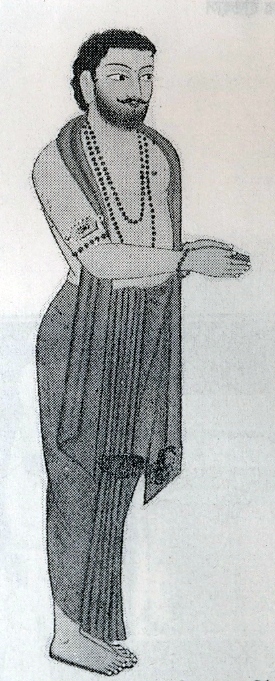
Image of Ramprasad Sen from "Brihad Banga" Dinendra Chadra Sen, 
Calcutta Univercity, Calcutta, 1935


Sadhak Rāmprasād Sen (Bengali: রামপ্রসাদ সেন; c. 1718 or c. 1723 – c. 1775) was a Hindu Shakta poet and saint of eighteenth century Bengal. His bhakti poems, known as Ramprasadi, are still popular in Bengal—they are usually addressed to the Hindu goddess Kali and written in Bengali. Stories of Ramprasad's life typically include legends and myths mixed with biographical details.

It is said that, Ramprasad was born into a Tantric family, and showed an inclination towards poetry from an early age. He became a disciple of Krishnananda Agamavagisha, a Tantric scholar and yogi. Ramprasad became well known for his devotional songs, eventually becoming the court poet of Raja Krishnachandra of Nadia. His life has been the subject of many stories depicting his devotion to, and relationship with, Kali. Ramprasad's literary works include Vidyasundar, Kali-kirtana, Krishna-kirtana and Shaktigiti.

Ramprasad is credited with creating a new compositional form that combined the Bengali folk style of Baul music with classical melodies and kirtan. The new style took root in Bengali culture with many poet-composers combining folk and raga-based melodies, mixing every common style of music from classical to semi-classical and folk. His songs are sung today, with a popular collection—Ramprasadi Sangit ("Songs of Ramprasad")—sold at Shakta temples and pithas in Bengal

Biographies of Ramprasad are a mixture of biography, metaphor, and legend.

Ramprasad was born in Garalgachha, in Hooghly District (at his maternal house), into a Tantric Baidya-Brahmin family. Due to the absence of birth records, his actual birth date is not known, but it is believed to be around 1718 or 1723. His father, Ramram Sen, was an Ayurvedic doctor and Sanskrit scholar. Ramprasad's mother Siddheswari was Ramram's second wife. Ramprasad was sent to a Sanskrit tol (school) where he learned Sanskrit grammar, literature, Persian, and Hindi. As a youth, he had a talent for poetry and learning new languages.

Ramram hoped his son would follow in his profession, but Ramprasad showed no interest in practical pursuits. As he grew up, his spiritual inclinations caused a great deal of anxiety to his parents. Believing that marriage would make Ramprasad more responsible, his parents married him to a girl named Sarvani when he was twenty-two years old. In keeping with the family custom, the newly wed couple was initiated by the family's spiritual teacher, Madhavacharya. According to traditional accounts, during initiation when the guru whispered the mantra to him, Ramprasad became consumed by intense longing for the goddess Kali. One year after the initiation he lost his guru. Ramprasad later became the disciple of Krishnananda Agamavagisha, a Tantric yogi and scholar. Agamavagisha was a well known devotee of Kali and the author of the Bengali book Tantrasara. Agamavagisha instructed Ramprasad in Tantric sadhanas (spiritual disciplines) and worship of Kali.

Instead of following his parents wishes and looking for a job, it is said that Ramprasad devoted most of his time to sadhana. Ramram died before he could make provisions to support the family. Forced finally by poverty, Ramprasad moved to Kolkata and worked as an accountant in the household of Durga Charan Mitra for a monthly salary of thirty rupees. According to traditional accounts, during his employment Ramprasad would write devotional songs to Kali. His fellow employees were appalled to see Ramprasad write poems in his account book, and reported him to their employer. Durga Charan Mitra, upon reading Ramprasad's work, was moved by his piety and literary skill. Instead of dismissing Ramprasad from work, he asked him to return to his village and compose songs to Kali, while continuing to pay his salary


Sadhana and poetry

After returning to his village, Ramprasad spent most of his time in sadhana, meditation, and prayer. Traditional accounts tell of several esoteric sadhanas that he performed, including standing neck-deep in the river Ganges, singing songs to Kali. Ramprasad would regularly practice his sadhana in a panchavati: a grove with five trees—banyan, bael, amalaki, ashoka, and peepul—all regarded as holy in Tantric tradition. He would reportedly spend hours meditating on a panchamundi asana (an altar inside which are interred five skulls–that of a snake, frog, rabbit, fox, and man). According to popular stories he had a vision of Kali in her form of Adyashakti Mahamaya.

Raja Krishnachandra of Nadia, a landlord under Nawab Sirajuddaula of Bengal, heard Ramprasad's hymns. Being an ardent devotee of Kali, he appointed Ramprasad as his court poet. Ramprasad rarely attended the Maharaja's court and would spend his time in sadhana and worship of Kali instead. Krishna Chandra became Ramprasad's benefactor, giving him 100 acres (0.40 km2; 0.16 sq mi) of tax free land. Ramprasad, in return, dedicated his book Vidyasundar ("Beautiful Knowledge") to the Maharaja. Krishna Chandra also gave Ramprasad the title Kaviranjana ("Entertainer of poets"). During the Maharaja's last years, Ramprasad stayed beside him, singing hymns to Kali. Ramprasad's mysticism was recognized by sufis and Nawab Sirajuddaula. Ramprasad is said to have visited the court of the Nawab at the Nawab's fervent request

Death

During Ramprasad's old age, he was looked after by his son Ramdulal and daughter-in-law Bhagavati. A folk story is told of Ramprasad's death. Ramprasad was very fond of taking part in Kali puja on the night of Diwali, the festival of lights. On one Kali puja night, he performed the puja and sang throughout the night. In the morning, Ramprasad carried the jar of Divine Mother's sanctified water on his head to the Ganges. He was followed by the devotees, who carried the clay image of Kali to be immersed in the Ganges after the night of worship. Ramprasad waded into the holy river, until the water was neck deep, all the while singing for Kali. As Kali's image was immersed, Ramprasad died— this was believed to be around 1775.

However, recent documentary evidence, a Kabulatipatra dated April 1794 bearing the sign of Ramprasad Sen as a witness, clearly proves the fact that Ramprasad Sen was alive in 1794. The said Kabulatipatra has been preserved and displayed at Sabarna Sangrahashala in Barisha


Stories and legends

In Bengal, popular stories and legends are told of Ramprasad. One of the most well known stories is about a "radiant girl" who helped him one day. Ramprasad was repairing a fence with the assistance of his daughter, who left shortly thereafter. Soon a "radiant girl", whom he didn't recognize, came to help him. After finishing the task, she vanished. According to the story, Ramprasad then realized that she was a manifestation of Kali.

Another popular story is told of Ramprasad's vision of goddess Annapurna of Varanasi. Ramprasad was on his way to the river for his daily ritual bath when a beautiful young woman stopped him, asking if she could hear him sing a devotional song to the Divine Mother. Ramprasad requested her to wait, since it was getting late for his noon worship. When he returned, he couldn't find her, and began to think that it may have been the "play of Divine Mother." Sitting down to meditate, he was surrounded by a radiant light and heard a female voice saying, "I am Annapurna (…) I came all the way from Varanasi to hear your songs but, alas, I had to leave disappointed." Ramprasad was angry with himself and immediately left for Varanasi to find Mother Annapurna and sing for her. After walking many miles, he reached Triveni, where he took rest under a tree on the bank of the Ganges. Here he reportedly received another vision, saw the same mystical light, and heard the Mother's voice saying, "Stay here and sing for me. (…) Varanasi is not the only place where I live; I pervade the whole universe.


Ramprasad Sen is regarded as one of the notable figures of the bhakti movement in Bengal during the eighteenth century. He is credited with popularizing the bhakti Shakta tradition and Shyama Sangeet—devotional songs to the goddess Kali. Ramprasad was the first Shakta poet to address Kali with such intimate devotion, and to sing of her as a tender loving mother or even as a little girl. After him, a school of Shakta poets continued the Kali-bhakti tradition.

Ramprasad created a new compositional form that combined the Bengali folk style of Baul music with classical melodies and kirtan. This new form took root in Bengali culture for the next hundred and fifty years, with hundreds of poet-composers combining folk and raga-based melodies, and bringing together styles of music that included classical, semi-classical, and folk. His poetic style has been described as "sweet, familiar and unsophisticated", though his lyrics were sung in classical style rather than a folk style. Two of his notable successors as composers in the same style were Kamalakanta Bhattacarya and Mahendranath Bhattacarya.

Ramprasad's songs are known as Ramprasadi. The devotion to Kali often included as a background the events in Bengal during his time, such as the Bengal famine of 1770, economic hardships, and the deterioration of rural culture. His poems were very popular during his lifetime.

Ramprasad's literary works include Vidyasundar (or Kalikaman-gala) (ca. sixth or seventh decade of the 18th century), Kali-kirtana, the fragmentary Krishna-kirtana, and Shaktigiti. Kali-kirtana is a collection of lyric and narrative poetry describing the early life of Uma. Krishna-kirtana is an incomplete book of poems and songs to Krishna—the complete collection is yet to be discovered. Vidyasundara Kavya is written in a narrative style that was already popular in Bengali literature, telling the traditional love story of Vidya and Sundara—children of kings who are aided by Kali in meeting, falling in love, and marrying. Shaktigiti is Ramprasad's well known and respected work, in which he expresses his deepest feelings and love for Kali. In Shaktigiti, he shares the most intimate relationship with Kali—a child who can both love and quarrel with his mother over the inequities of human birth.

Ramakrishna Paramahamsa, a mystic of nineteenth century Bengal, often sang his songs and regarded Ramprasad as his beloved poet. Many of these songs are recorded in The Gospel of Sri Ramakrishna, which at one point mentions, "…he (Ramakrishna) would spend hours singing the devotional songs of great devotees of the Mother, such as Kamalakanta and Ramprasad. Those rhapsodic songs describing direct vision of God…"Paramhansa Yogananda also was an admirer of Ramprasad and his devotional songs, frequently singing them. Sister Nivedita compared Ramprasad with the English poet William Blake.

Ramprasad's songs are still popular in Bengal and recited regularly in the worship of Kali. Scholar Shuma Chakrovarty notes that his songs are "broadcast over the radio and sung on the streets and in the homes and temples of Calcutta by a cross-section of people—children, the elderly, housewives, businessmen, scholars, the illiterate, monks, householders, and the youth of all classes". Many of his songs were sung by popular Shyama Sangeet singers like Dhananjay Bhattacharya, Pannalal Bhattacharya, and Anup Ghosal. Still his master literature combination of simple words in the songs melts one's hearts and floods the eye with tears. An [anekanta]vadin reading of Ramprasad's texts is also found. 


https://blogger.googleusercontent.com/img/b/R29vZ2xl/AVvXsEgeJX4FFBuAsZ39ImQ6-AJy-d-ZRh_HMP8Ge6kO_LlPH0tuTeYYtzQSJ76QG75N4yl5IQCrEuiyoNJyzD83Z8vaXGllIcOYDFQv81xHT-_njREmDmjven_MEcIem0NgEYTb52hQ8KzNxJc/s1600/Ramprasad_Sen.jpg

MIND  DON'T  SLEEP


So I say : Mind, don’t you sleep
Or Time is going to get in and steal from you.

You hold on to the sword of Kali’s name.
The shield of Tara’s name.

Can Death overwhelm you?
Sound Kali’s name on a horn and sound it loud.

Chant ‘Durga, Durga,’
Until you bring the dawn around.

If She won’t save you in this Dark Age-
But how many great sinners have been saved!

Is Ramprasad then
So unsalvageable a rogue?


WHY  IS  MOTHER  KALI  SO  RADIANTLY  BLACK ?


Why is Mother Kali so radiantly black?
Because she is so powerful,
that even mentioning her name destroys delusion.
Because she is so beautiful,
Lord Shiva, Conquerer of death,
lies blissfully vanquished,
beneath the red soled feet.
There are subtle hues of blackness,
But her bright complexion
is the mystery that is utterly black,
overwhelmingly black, wonderfully black.
When she awakens in the lotus shrine
within the heart’s secret cave,
her blackness becomes the mystic illumination
that causes the twelve petal blossom there
to glow more intensely than golden embers.
Her lovely form is the incomparable
Kali- black blacker than the King of Death.
Whoever gazes upon this radiant blackness falls eternally in love
and feels no attraction to any other,
discovering everywhere only her.
This poet sighs deeply,
“Where is this brilliant lady, this black light beyond luminosity?
Though I have never seen her, simply hearing her name,
the mind becomes absorbed completely in her astonishing reality.

Om Kali! Om Kali! Om Kali!


WHO  IN  THIS  WORLD


Who in this world
can understand what
Mother Kali really is?
The six systems of philosophy
remain powerless to describe Her.
She is the inmost awareness
of the sage who realizes
that Consciousness alone exists.
She is the life blossoming within
the creatures of the universe.
Both macrocosm and microcosm
are lost within Mother’s Womb.
Now can you sense
how indescribable She is?

The yogi meditates upon Her
in the six subtle nerve centres
as She sports with delight
through the lotus wilderness
of the pristine human body,
playing with Her Consort,
Shiva, the Great Swan.

When anyone attempts to know Her,
the singer of this song laughs.
Can you swim across
a shore less ocean?
Yet the child in me still
reaches out to touch the moon.


SHE'S  PLAYING  IN  MY  HEART


She’s playing in my heart.
Whatever I think, I think Her name.
I close my eyes and She’s in there
Garlanded with human heads.


Common sense, know-how-gone,
So they say I’m crazy. Let them.
All I ask, my crazy Mother,
Is that You stay put. 


Ramprasad cries out: Mother, don’t
Reject this lotus heart You live in
Don’t despise this human offering
At Your feet.


DOES SUFFERING  SCARE  ME ?


Does suffering scare me? O Mother,
Let me suffer in this world. Do I require more?
Suffering runs ahead of me and runs after me.
I carry it on my head and set up a stand
In the bazaar to peddle it.
I’m a poison worm, I thrive on poison.
I carry it wherever I go.


Prasad says: Mother, lift off my load.
I need a little rest. It’s amazing!
Others brag about their happiness,
I brag about my suffering.


O  LONGING  MIND

O longing mind,
consecrate your being to pure love.
Turn every thought to Goddess Tara.
She will bear you tenderly across the raging sea
of separation and individuality.

Be utterly dedicated to her reality.
Cry aloud Ma Kali, Ma Kali.
Know that she can clarify
the inconceivable maze of relativity.
To hope for assistance and guidance through this world
from wealth, relatives, and religious rites
provides no profound solution.
Have you forgotten that everyone is lost?

Where are you now? Why are you traveling?
This cosmos is the strange theater where souls act,
wearing various costumes and disguises.
This intricate play of transparent energy
is initiated, sustained, and dissolved by Kali,
who is the dream power of Absolute Reality.
At this very moment, you are resting
on the vast lap of Mother’s cosmic dream
that you misperceive
as the narrow prison of suffering.
Why abandon the kingdom of awareness
to obsession with self and disdain for others,
to hollow passion and abject clinging?
You are creating a disease without a remedy.
The brief day of your earthly life is almost over.
Meditate now on beautiful Black Tara.
She is seated upon the jewel island of essence
in the transparent sea of ultimacy.

This poet sings drunkenly:
“Tara! Tara! Tara!
Your name is ambrosia.
May all beings enter the secret sanctuary
through this name,
tasting your unique sweetness,
self-luminous awareness.”


Hindu Goddess Kali On Hindu Temple by Carl Purcell