Monday, April 6, 2020

CHILDREN - Photographer Anna Azbel


ZzATdNN04D8.jpg


L2ARFRy8Uzs.jpg


m_ZPP5iUXcQ.jpg


qLdZfN_xgmM.jpg


wz0KLwOOg-c.jpg


E7VQ6OAllBg.jpg


_72H3LGlNIc.jpg


15xHwIbeuwo.jpg


6KQM2fDiGhg.jpg


B1ty7_Gg8UA.jpg


a1LlBFf3yq0.jpg


barres de séparations


QUEEN ELIZABETH AND THE EARL OF LEICESTER - by Lyndon Orr - from ''FAMOUS AFFINITIES OF HISTORY THE ROMANCE OF DEVOTION''


https://www.thevintagenews.com/wp-content/uploads/2019/03/pjimage-9.jpg

Queen Elizabeth I of England (reign: 1558-1603) and  Robert Dudley, the Earl of Leicester


 History has many romantic stories to tell of the part which women have played in determining the destinies of nations. Sometimes it is a woman's beauty that causes the shifting of a province. Again it is another woman's rich possessions that incite invasion and lead to bloody wars. Marriages or dowries, or the refusal of marriages and the lack of dowries, inheritance through an heiress, the failure of a male succession, in these and in many other ways women have set their mark indelibly upon the trend of history.

However, if we look over these different events we shall find that it is not so much the mere longing for a woman, the desire to have her as a queen, that has seriously affected the annals of any nation. Kings, like ordinary men, have paid their suit and then have ridden away repulsed, yet not seriously dejected. Most royal marriages are made either to secure the succession to a throne by a legitimate line of heirs or else to unite adjoining states and make a powerful kingdom out of two that are less powerful. But, as a rule, kings have found greater delight in some sheltered bower remote from courts than in the castled halls and well-cared-for nooks where their own wives and children have been reared with all the appurtenances of legitimacy.

There are not many stories that hang persistently about the love-making of a single woman. In the case of one or another we may find an episode or two, something dashing, something spirited or striking, something brilliant and exhilarating, or something sad. But for a woman's whole life to be spent in courtship that meant nothing and that was only a clever aid to diplomacy, this is surely an unusual and really wonderful thing.

It is the more unusual because the woman herself was not intended by nature to be wasted upon the cold and cheerless sport of chancellors and counselors and men who had no thought of her except to use her as a pawn. She was hot-blooded, descended from a fiery race, and one whose temper was quick to leap into the passion of a man.

In studying this phase of the long and interesting life of Elizabeth of England we must notice several important facts. In the first place, she gave herself, above all else, to the maintenance of England - not an England that would be half Spanish or half French, or even partly Dutch and Flemish, but the Merry England of tradition - the England that was one and undivided, with its growing freedom of thought, its bows and bills, its nut-brown ale, its sturdy yeomen, and its loyalty to crown and Parliament. She once said, almost as in an agony: 

 "I love England more than anything!"

And one may really hold that this was true.

For England she schemed and planned. For England she gave up many of her royal rights. For England she descended into depths of treachery. For England she left herself on record as an arrant liar, false, perjured, yet successful; and because of her success for England's sake her countrymen will hold her in high remembrance, since her scheming and her falsehood are the offenses that one pardons most readily in a woman.

In the second place, it must be remembered that Elizabeth's courtships and pretended love-makings were almost always a part of her diplomacy. When not a part of her diplomacy they were a mere appendage to her vanity. To seem to be the flower of the English people, and to be surrounded by the noblest, the bravest, and the most handsome cavaliers, not only of her own kingdom, but of others, this was, indeed, a choice morsel of which she was fond of tasting, even though it meant nothing beyond the moment.

Finally, though at times she could be very cold, and though she made herself still colder in order that she might play fast and loose with foreign suitors who played fast and loose with her, the King of Spain, the Duc d'Alencon, brother of the French king, with an Austrian archduke, with a magnificent barbarian prince of Muscovy, with Eric of Sweden, or any other Scandinavian suitor, she felt a woman's need for some nearer and more tender association to which she might give freer play and in which she might feel those deeper emotions without the danger that arises when love is mingled with diplomacy.

Let us first consider a picture of the woman as she really was in order that we may understand her triple nature, consummate mistress of every art that statesmen know, and using at every moment her person as a lure; a vain-glorious queen who seemed to be the prey of boundless vanity; and, lastly, a woman who had all a woman's passion, and who could cast suddenly aside the check and balance which restrained her before the public gaze and could allow herself to give full play to the emotion that she inherited from the king, her father, who was himself a marvel of fire and impetuosity. That the daughter of Henry VIII. and Anne Boleyn should be a gentle, timid maiden would be to make heredity a farce.

Elizabeth was about twenty-five years of age when she ascended the throne of England. It is odd that the date of her birth cannot be given with precision. The intrigues and disturbances of the English court, and the fact that she was a princess, made her birth a matter of less account than if there had been no male heir to the throne. At any rate, when she ascended it, after the deaths of her brother, King Edward VI., and her sister, Queen Mary, she was a woman well trained both in intellect and in physical development. 

 Mr. Martin Hume, who loves to dwell upon the later years of Queen Elizabeth, speaks rather bitterly of her as a "painted old harridan"; and such she may well have seemed when, at nearly seventy years of age, she leered and grinned a sort of skeleton smile at the handsome young courtiers who pretended to see in her the queen of beauty and to be dying for love of her.

Yet, in her earlier years, when she was young and strong and impetuous, she deserved far different words than these. The portrait of her by Zucchero, which now hangs in Hampton Court, depicts her when she must have been of more than middle age; and still the face is one of beauty, though it be a strange and almost artificial beauty, one that draws, attracts, and, perhaps, lures you on against your will.

It is interesting to compare this painting with the frank word picture of a certain German agent who was sent to England by his emperor, and who seems to have been greatly fascinated by Queen Elizabeth. She was at that time in the prime of her beauty and her power. Her complexion was of that peculiar transparency which is seen only in the face of golden blondes. Her figure was fine and graceful, and her wit an accomplishment that would have made a woman of any rank or time remarkable. The German envoy says:

She lives a life of such magnificence and feasting as can hardly be imagined, and occupies a great portion of her time with balls, banquets, hunting, and similar amusements, with the utmost possible display, but nevertheless she insists upon far greater respect being shown her than was exacted by Queen Mary. She summons Parliament, but lets them know that her orders must be obeyed in any case.

If any one will look at the painting by Zucchero he will see how much is made of Elizabeth's hands, a distinctive feature quite as noble with the Tudors as is the "Hapsburg lip" among the descendants of the house of Austria. These were ungloved, and were very long and white, and she looked at them and played with them a great deal; and, indeed, they justified the admiration with which they were regarded by her flatterers.

Such was the personal appearance of Elizabeth. When a young girl, we have still more favorable opinions of her that were written by those who had occasion to be near her. Not only do they record swift glimpses of her person, but sometimes in a word or two they give an insight into certain traits of mind which came out prominently in her later years.

It may, perhaps, be well to view her as a woman before we regard her more fully as a queen. It has been said that Elizabeth inherited many of the traits of her father, the boldness of spirit, the rapidity of decision, and, at the same time, the fox like craft which often showed itself when it was least expected. 

 Henry had also, as is well known, a love of the other sex, which has made his reign memorable. And yet it must be noted that while he loved much, it was not loose love. Many a king of England, from Henry II. to Charles II., has offended far more than Henry VIII. Where Henry loved, he married; and it was the unfortunate result of these royal marriages that has made him seem unduly fond of women. If, however, we examine each one of the separate espousals we shall find that he did not enter into it lightly, and that he broke it off unwillingly. His ardent temperament, therefore, was checked by a certain rational or conventional propriety, so that he was by no means a loose liver, as many would make him out to be.

We must remember this when we recall the charges that have been made against Elizabeth, and the strange stories that were told of her tricks, by no means seemly tricks, which she used to play with her guardian, Lord Thomas Seymour. The antics she performed with him in her dressing room were made the subject of an official inquiry; yet it came out that while Elizabeth was less than sixteen, and Lord Thomas was very much her senior, his wife was with him on his visits to the chamber of the princess.

Sir Robert Tyrwhitt and his wife were also sent to question her, Tyrwhitt had a keen mind and one well trained to cope with any other's wit in this sort of cross examination. Elizabeth was only a girl of fifteen, yet she was a match for the accomplished courtier in diplomacy and quick retort. He was sent down to worm out of her everything that she knew. Threats and flattery and forged letters and false confessions were tried on her; but they were tried in vain. She would tell nothing of importance. She denied everything. She sulked, she cried, she availed herself of a woman's favorite defense in suddenly attacking those who had attacked her. She brought counter charges against Tyrwhitt, and put her enemies on their own defense. Not a compromising word could they wring out of her.

She bitterly complained of the imprisonment of her governess, Mrs. Ashley, and cried out:

"I have not so behaved that you need put more mistresses upon me!"

Altogether, she was too much for Sir Robert, and he was wise enough to recognize her cleverness.

"She hath a very good wit," said he, shrewdly; "and nothing is to be gotten of her except by great policy." And he added: "If I had to say my fancy, I think it more meet that she should have two governesses than one." 

 Mr. Hume notes the fact that after the two servants of the princess had been examined and had told nothing very serious they found that they had been wise in remaining friends of the royal girl. No sooner had Elizabeth become queen than she knighted the man Parry and made him treasurer of the household, while Mrs. Ashley, the governess, was treated with great consideration. Thus, very naturally, Mr. Hume says: "They had probably kept back far more than they told."

Even Tyrwhitt believed that there was a secret compact between them, for he said, quaintly: "They all sing one song, and she hath set the note for them."

Soon after this her brother Edward's death brought to the throne her elder sister, Mary, who has harshly become known as Bloody Mary. During this time Elizabeth put aside her boldness, and became apparently a shy and simple-minded virgin. Surrounded on every side by those who sought to trap her, there was nothing in her bearing to make her seem the head of a party or the young chief of a faction. Nothing could exceed her in meekness. She spoke of her sister in the humblest terms. She exhibited no signs of the Tudor animation that was in reality so strong a part of her character.

But, coming to the throne, she threw away her modesty and brawled and rioted with very little self-restraint. The people as a whole found little fault with her. She reminded them of her father, the bluff King Hal; and even those who criticized her did so only partially. They thought much better of her than they had of her saturnine sister, the first Queen Mary.

The life of Elizabeth has been very oddly misunderstood, not so much for the facts in it as for the manner in which these have been arranged and the relation which they have to one another. We ought to recollect that this woman did not live in a restricted sphere, that her life was not a short one, and that it was crowded with incidents and full of vivid color. Some think of her as living for a short period of time and speak of the great historical characters who surrounded her as belonging to a single epoch. To them she has one set of suitors all the time, the Duc d'Alencon, the King of Denmark's brother, the Prince of Sweden, the russian potentate, the archduke sending her sweet messages from Austria, the melancholy King of Spain, together with a number of her own brilliant Englishmen, Sir William Pickering, Sir Robert Dudley, Lord Darnley, the Earl of Essex, Sir Philip Sidney, and Sir Walter Raleigh.

Of course, as a matter of fact, Elizabeth lived for nearly seventy years, almost three-quarters of a century, and in that long time there came and went both men and women, those whom she had used and cast aside, with others whom she had also treated with gratitude, and who had died gladly serving her. But through it all there was a continual change in her environment, though not in her. The young soldier went to the battle-field and died; the wise counselor gave her his advice, and she either took it or cared nothing for it. She herself was a curious blending of forwardness and folly, of wisdom and wantonness, of frivolity and unbridled fancy. But through it all she loved her people, even though she often cheated them and made them pay her taxes in the harsh old way that prevailed before there was any right save the king's will. 

 At the same time, this was only by fits and starts, and on the whole she served them well. Therefore, to most of them she was always the good Queen Bess. What mattered it to the ditcher and yeoman, far from the court, that the queen was said to dance in her nightdress and to swear like a trooper?

It was, indeed, largely from these rustic sources that such stories were scattered throughout England. Peasants thought them picturesque. More to the point with them were peace and prosperity throughout the country, the fact that law was administered with honesty and justice, and that England was safe from her deadly enemies, the swarthy Spaniards and the scheming French.

But, as I said, we must remember always that the Elizabeth of one period was not the Elizabeth of another, and that the England of one period was not the England of another. As one thinks of it, there is something wonderful in the almost star like way in which this girl flitted unharmed through a thousand perils. Her own countrymen were at first divided against her; a score of greedy, avaricious suitors sought her destruction, or at least her hand to lead her to destruction; all the great powers of the Continent were either demanding an alliance with England or threatening to dash England down amid their own dissensions.

What had this girl to play off against such dangers? Only an undaunted spirit, a scheming mind that knew no scruples, and finally her own person and the fact that she was a woman, and, therefore, might give herself in marriage and become the mother of a race of kings.

It was this last weapon, the weapon of her sex, that proved, perhaps, the most powerful of all. By promising a marriage or by denying it, or by neither promising nor denying but withholding it, she gave forth a thousand wily intimations which kept those who surrounded her at bay until she had made still another deft and skilful combination, escaping like some startled creature to a new place of safety.

In 1583, when she was fifty years of age, she had reached a point when her courtships and her pretended love making were no longer necessary. She had played Sweden against Denmark, and France against Spain, and the Austrian archduke against the others, and many suitors in her own land against the different factions which they headed. She might have sat herself down to rest; for she could feel that her wisdom had led her up into a high place, whence she might look down in peace and with assurance of the tranquillity that she had won. Not yet had the great Armada rolled and thundered toward the English shores. But she was certain that her land was secure, compact, and safe. 

 It remains to see what were those amatory relations which she may be said to have sincerely held. She had played at love-making with foreign princes, because it was wise and, for the moment, best. She had played with Englishmen of rank who aspired to her hand, because in that way she might conciliate, at one time her Catholic and at another her Protestant subjects. But what of the real and inward feeling of her heart, when she was not thinking of political problems or the necessities of state!

This is an interesting question. One may at least seek the answer, hoping thereby to solve one of the most interesting phases of this perplexing and most remarkable woman.

It must be remembered that it was not a question of whether Elizabeth desired marriage. She may have done so as involving a brilliant stroke of policy. In this sense she may have wished to marry one of the two French princes who were among her suitors. But even here she hesitated, and her Parliament disapproved; for by this time England had become largely Protestant. Again, had she married a French prince and had children, England might have become an appanage of France.

There is no particular evidence that she had any feeling at all for her Flemish, Austrian, or Russian suitors, while the Swede's pretensions were the laughing-stock of the English court. So we may set aside this question of marriage as having nothing to do with her emotional life. She did desire a son, as was shown by her passionate outcry when she compared herself with Mary of Scotland.

"The Queen of Scots has a bonny son, while I am but a barren stock!"

She was too wise to wed a subject; though, had she married at all, her choice would doubtless have been an Englishman. In this respect, as in so many others, she was like her father, who chose his numerous wives, with the exception of the first, from among the English ladies of the court; just as the showy Edward IV. was happy in marrying "Dame Elizabeth Woodville." But what a king may do is by no means so easy for a queen; and a husband is almost certain to assume an authority which makes him unpopular with the subjects of his wife.

Hence, as said above, we must consider not so much whom she would have liked to marry, but rather to whom her love went out spontaneously, and not as a part of that amatory play which amused her from the time when she frisked with Seymour down to the very last days, when she could no longer move about, but when she still dabbled her cheeks with rouge and powder and set her skeleton face amid a forest of ruffs. 

 There were many whom she cared for after a fashion. She would not let Sir Walter Raleigh visit her American colonies, because she could not bear to have him so long away from her. She had great moments of passion for the Earl of Essex, though in the end she signed his death-warrant because he was as dominant in spirit as the queen herself.

Readers of Sir Walter Scott's wonderfully picturesque novel, Kenilworth, will note how he throws the strongest light upon Elizabeth's affection for Robert Dudley, Earl of Leicester. Scott's historical instinct is united here with a vein of psychology which goes deeper than is usual with him. We see Elizabeth trying hard to share her favor equally between two nobles; but the Earl of Essex fails to please her because he lacked those exquisite manners which made Leicester so great a favorite with the fastidious queen.

Then, too, the story of Leicester's marriage with Amy Robsart is something more than a myth, based upon an obscure legend and an ancient ballad. The earl had had such a wife, and there were sinister stories about the manner of her death. But it is Scott who invents the villainous Varney and the bulldog Anthony Foster; just as he brought the whole episode into the foreground and made it occur at a period much later than was historically true. Still, Scott felt and he was imbued with the spirit and knowledge of that time, a strong conviction that Elizabeth loved Leicester as she really loved no one else.

There is one interesting fact which goes far to convince us. Just as her father was, in a way, polygamous, so Elizabeth was even more truly polyandrous. It was inevitable that she should surround herself with attractive men, whose love-locks she would caress and whose flatteries she would greedily accept. To the outward eye there was very little difference in her treatment of the handsome and daring nobles of her court; yet a historian of her time makes one very shrewd remark when he says: "To every one she gave some power at times to all save Leicester."

Cecil and Walsingham in counsel and Essex and Raleigh in the field might have their own way at times, and even share the sovereign's power, but to Leicester she intrusted no high commands and no important mission. Why so? Simply because she loved him more than any of the rest; and, knowing this, she knew that if besides her love she granted him any measure of control or power, then she would be but half a queen and would be led either to marry him or else to let him sway her as he would. 

For the reason given, one may say with confidence that, while Elizabeth's light loves were fleeting, she gave a deep affection to this handsome, bold, and brilliant Englishman and cherished him in a far different way from any of the others. This was as near as she ever came to marriage, and it was this love at least which makes Shakespeare's famous line as false as it is beautiful, when he describes "the imperial votaress" as passing by "in maiden meditation, fancy free." 


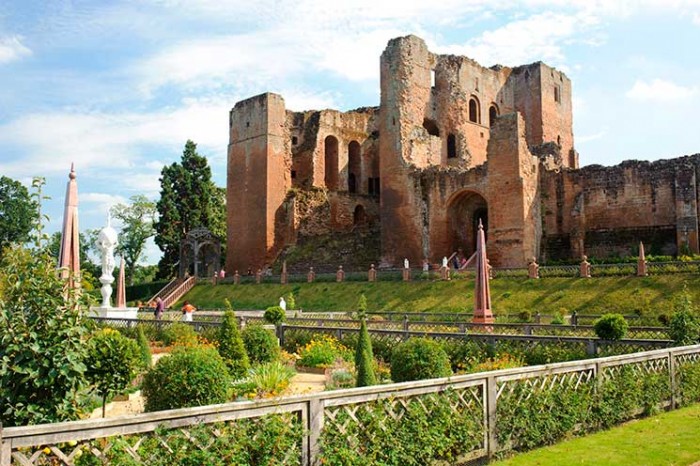
https://www.discoverbritainmag.com/wp-content/uploads/2016/01/webkenilworth-700x466.jpg

The historic Kenilworth Castle, founded in Norman times and used until the Elizabethan era, now ruined . - Credit: VisitEngland/English Heritage



37 (700x93, 74Kb)


Sunday, April 5, 2020

WE ARE ALL PAINTERS - by Ola Radka


WE  ARE  ALL  PAINTERS

by   Ola Radka 


We all paint our lives.
The mountains of challenges,
The rivers of tears,
The waterfalls of joy.


We mix the colours of sorrow and laughter
And add the colours of experience and the years that passed.
The souls we will always remember
And the moments we will never forget.


Saturday, April 4, 2020

LEON GAMBETTA AND LEONIE LEON - by Lyndon Orr - from ''FAMOUS AFFINITIES OF HISTORY THE ROMANCE OF DEVOTION''


Léonie Léon (1875) by Jean Corabœuf

Léonie Léon ( 1838 – 1906)


Léon Gambetta ( 1838 –  1882)


 The present French Republic has endured for over forty years. Within that time it has produced just one man of extraordinary power and parts. This was Leon Gambetta. Other men as remarkable as he were conspicuous in French political life during the first few years of the republic; but they belonged to an earlier generation, while Gambetta leaped into prominence only when the empire fell, crashing down in ruin and disaster.

It is still too early to form an accurate estimate of him as a statesman. His friends praise him extravagantly. His enemies still revile him bitterly. The period of his political career lasted for little more than a decade, yet in that time it may be said that he lived almost a life of fifty years. Only a short time ago did the French government cause his body to be placed within the great Pantheon, which contains memorials of the heroes and heroines of France. But, though we may not fairly judge of his political motives, we can readily reconstruct a picture of him as a man, and in doing so recall his one romance, which many will remember after they have forgotten his oratorical triumphs and his statecraft.

Leon Gambetta was the true type of the southern Frenchman—what his countrymen call a meridional. The Frenchman of the south is different from the Frenchman of the north, for the latter has in his veins a touch of the viking blood, so that he is very apt to be fair-haired and blue-eyed, temperate in speech, and self-controlled. He is different, again, from the Frenchman of central France, who is almost purely Celtic. The meridional has a marked vein of the Italian in him, derived from the conquerors of ancient Gaul. He is impulsive, ardent, fiery in speech, hot-tempered, and vivacious to an extraordinary degree.

Gambetta, who was born at Cahors, was French only on his mother's side, since his father was of Italian birth. It is said also that somewhere in his ancestry there was a touch of the Oriental. At any rate, he was one of the most southern of the sons of southern France, and he showed the precocious maturity which belongs to a certain type of Italian. At twenty-one he had already been admitted to the French bar, and had drifted to Paris, where his audacity, his pushing nature, and his red-hot un-restraint of speech gave him a certain notoriety from the very first.

It was toward the end of the reign of Napoleon III. that Gambetta saw his opportunity. The emperor, weakened by disease and yielding to a sort of feeble idealism, gave to France a greater freedom of speech than it had enjoyed while he was more virile. This relaxation of control merely gave to his opponents more courage to attack him and his empire. Demagogues harangued the crowds in words which would once have led to their imprisonment. In the National Assembly the opposition did all within its power to hamper and defeat the policy of the government.

In short, republicanism began to rise in an ominous and threatening way; and at the head of republicanism in Paris stood forth Gambetta, with his impassioned eloquence, his stinging phrases, and his youthful boldness. He became the idol of that part of Paris known as Belleville, where artisans and laborers united with the rabble of the streets in hating the empire and in crying out for a republic. 

 Gambetta was precisely the man to voice the feelings of these people. Whatever polish he acquired in after years was then quite lacking; and the crudity of his manners actually helped him with the men whom he harangued. A recent book by M. Francis Laur, an ardent admirer of Gambetta, gives a picture of the man which may be nearly true of him in his later life, but which is certainly too flattering when applied to Gambetta in 1868, at the age of thirty.

How do we see Gambetta as he was at thirty? A man of powerful frame and of intense vitality, with thick, clustering hair, which he shook as a lion shakes its mane; olive-skinned, with eyes that darted fire, a resonant, sonorous voice, and a personal magnetism which was instantly felt by all who met him or who heard him speak. His manners were not refined. He was fond of oil and garlic. His gestures were often more frantic than impressive, so that his enemies called him "the furious fool." He had a trick of spitting while he spoke. He was by no means the sort of man whose habits had been formed in drawing-rooms or among people of good breeding. Yet his oratory was, of its kind, superb.

In 1869 Gambetta was elected by the Red Republicans to the Corps Legislatif. From the very first his vehemence and fire gained him a ready hearing. The chamber itself was arranged like a great theater, the members occupying the floor and the public the galleries. Each orator in addressing the house mounted a sort of rostrum and from it faced the whole assemblage, not noticing, as with us, the presiding officer at all. The very nature of this arrangement stimulated parliamentary speaking into eloquence and flamboyant oratory.

After Gambetta had spoken a few times he noticed in the gallery a tall, graceful woman, dressed in some neutral color and wearing long black gloves, which accentuated the beauty of her hands and arms. No one in the whole assembly paid such close attention to the orator as did this woman, whom he had never seen before and who appeared to be entirely alone.

When it came to him to speak on another day he saw sitting in the same place the same stately and yet lithe and sinuous figure. This was repeated again and again, until at last whenever he came to a peculiarly fervid burst of oratory he turned to this woman's face and saw it lighted up by the same enthusiasm which was stirring him.

Finally, in the early part of 1870, there came a day when Gambetta surpassed himself in eloquence. His theme was the grandeur of republican government. Never in his life had he spoken so boldly as then, or with such fervor. The ministers of the emperor shrank back in dismay as this big-voiced, strong-limbed man hurled forth sentence after sentence like successive peals of irresistible artillery. 

 As Gambetta rolled forth his sentences, superb in their rhetoric and all ablaze with that sort of intense feeling which masters an orator in the moment of his triumph, the face of the lady in the gallery responded to him with wonderful appreciation. She was no longer calm, unmoved, and almost severe. She flushed, and her eyes as they met his seemed to sparkle with living fire. When he finished and descended from the rostrum he looked at her, and their eyes cried out as significantly as if the two had spoken to each other.

Then Gambetta did what a person of finer breeding would not have done. He hastily scribbled a note, sealed it, and called to his side one of the official pages. In the presence of the great assemblage, where he was for the moment the center of attention, he pointed to the lady in the gallery and ordered the page to take the note to her.

One may excuse this only on the ground that he was completely carried away by his emotion, so that to him there was no one present save this enigmatically fascinating woman and himself. But the lady on her side was wiser; or perhaps a slight delay gave her time to recover her discretion. When Gambetta's note was brought to her she took it quietly and tore it into little pieces without reading it; and then, rising, she glided through the crowd and disappeared.

Gambetta in his excitement had acted as if she were a mere adventuress. With perfect dignity she had shown him that she was a woman who retained her self-respect.

Immediately upon the heels of this curious incident came the outbreak of the war with Germany. In the war the empire was shattered at Sedan. The republic was proclaimed in Paris. The French capital was besieged by a vast German army. Gambetta was made minister of the interior, and remained for a while in Paris even after it had been blockaded. But his fiery spirit chafed under such conditions. He longed to go forth into the south of France and arouse his countrymen with a cry to arms against the invaders.

Escaping in a balloon, he safely reached the city of Tours; and there he established what was practically a dictatorship. He flung himself with tremendous energy into the task of organizing armies, of equipping them, and of directing their movements for the relief of Paris. He did, in fact, accomplish wonders. He kept the spirit of the nation still alive. Three new armies were launched against the Germans. Gambetta was everywhere and took part in everything that was done. His inexperience in military affairs, coupled with his impatience of advice, led him to make serious mistakes. Nevertheless, one of his armies practically defeated the Germans at Orleans; and could he have had his own way, even the fall of Paris would not have ended the war.

"Never," said Gambetta, "shall I consent to peace so long as France still has two hundred thousand men under arms and more than a thousand cannon to direct against the enemy!"

But he was overruled by other and less fiery statesmen. Peace was made, and Gambetta retired for a moment into private life. If he had not succeeded in expelling the German hosts he had, at any rate, made Bismarck hate him, and he had saved the honor of France. 

 It was while the National Assembly at Versailles was debating the terms of peace with Germany that Gambetta once more delivered a noble and patriotic speech. As he concluded he felt a strange magnetic attraction; and, sweeping the audience with a glance, he saw before him, not very far away, the same woman with the long black gloves, having about her still an air of mystery, but again meeting his eyes with her own, suffused with feeling.

Gambetta hurried to an anteroom and hastily scribbled the following note:

At last I see you once more. Is it really you?

The scrawl was taken to her by a discreet official, and this time she received the letter, pressed it to her heart, and then slipped it into the bodice of her gown. But this time, as before, she left without making a reply.

It was an encouragement, yet it gave no opening to Gambetta—for she returned to the National Assembly no more. But now his heart was full of hope, for he was convinced with a very deep conviction that somewhere, soon, and in some way he would meet this woman, who had become to him one of the intense realities of his life. He did not know her name. They had never exchanged a word. Yet he was sure that time would bring them close together.

His intuition was unerring. What we call chance often seems to know what it is doing. Within a year after the occurrence that has just been narrated an old friend of Gambetta's met with an accident which confined him to his house. The statesman strolled to his friend's residence. The accident was a trifling one, and the mistress of the house was holding a sort of informal reception, answering questions that were asked her by the numerous acquaintances who called.

As Gambetta was speaking, of a sudden he saw before him, at the extremity of the room, the lady of his dreams, the sphinx of his waking hours, the woman who four years earlier had torn up the note which he addressed to her, but who more recently had kept his written words. Both of them were deeply agitated, yet both of them carried off the situation without betraying themselves to others, Gambetta approached, and they exchanged a few casual commonplaces. But now, close together, eye and voice spoke of what was in their hearts.

Presently the lady took her leave. Gambetta followed closely. In the street he turned to her and said in pleading tones:

"Why did you destroy my letter? You knew I loved you, and yet all these years you have kept away from me in silence."

Then the girl—for she was little more than a girl—hesitated for a moment. As he looked upon her face he saw that her eyes were full of tears. At last she spoke with emotion:

"You cannot love me, for I am unworthy of you. Do not urge me. Do not make promises. Let us say good-by. At least I must first tell you of my story, for I am one of those women whom no one ever marries." 

 Gambetta brushed aside her pleadings. He begged that he might see her soon. Little by little she consented; but she would not see him at her house. She knew that his enemies were many and that everything he did would be used against him. In the end she agreed to meet him in the park at Versailles, near the Petit Trianon, at eight o'clock in the morning.

When she had made this promise he left her. Already a new inspiration had come to him, and he felt that with this woman by his side he could accomplish anything.

At the appointed hour, in the silence of the park and amid the sunshine of the beautiful morning, the two met once again. Gambetta seized her hands with eagerness and cried out in an exultant tone:

"At last! At last! At last!"

But the woman's eyes were heavy with sorrow, and upon her face there was a settled melancholy. She trembled at his touch and almost shrank from him. Here was seen the impetuosity of the meridional. He had first spoken to this woman only two days before. He knew nothing of her station, of her surroundings, of her character. He did not even know her name. Yet one thing he knew absolutely—that she was made for him and that he must have her for his own. He spoke at once of marriage; but at this she drew away from him still farther.

"No," she said. "I told you that you must not speak to me until you have heard my story."

He led her to a great stone bench near by; and, passing his arm about her waist, he drew her head down to his shoulder as he said:

"Well, tell me. I will listen."

Then this girl of twenty-four, with perfect frankness, because she was absolutely loyal, told him why she felt that they must never see each other any more-much less marry and be happy. She was the daughter of a colonel in the French army. The sudden death of her father had left her penniless and alone. Coming to Paris at the age of eighteen, she had given lessons in the household of a high officer of the empire. This man had been attracted by her beauty, and had seduced her.

Later she had secured the means of living modestly, realizing more deeply each month how dreadful had been her fate and how she had been cut off from the lot of other girls. She felt that her life must be a perpetual penance for what had befallen her through her ignorance and inexperience. She told Gambetta that her name was Leonie Leon. As is the custom of Frenchwomen who live alone, she styled herself madame. It is doubtful whether the name by which she passed was that which had been given to her at baptism; but, if so, her true name has never been disclosed.

When she had told the whole of her sad story to Gambetta he made nothing of it. She said to him again:

"You cannot love me. I should only dim your fame. You can have nothing in common with a dishonored, ruined girl. That is what I came here to explain to you. Let us part, and let us for all time forget each other."

But Gambetta took no heed of what she said. Now that he had found her, he would not consent to lose her. He seized her slender hands and covered them with kisses. Again he urged that she should marry him.

Her answer was a curious one. She was a devoted Catholic and would not regard any marriage as valid save a religious marriage. On the other hand, Gambetta, though not absolutely irreligious, was leading the opposition to the Catholic party in France. The Church to him was not so much a religious body as a political one, and to it he was unalterably opposed. Personally, he would have no objections to being married by a priest; but as a leader of the anti-clerical party he felt that he must not recognize the Church's claim in any way. A religious marriage would destroy his influence with his followers and might even imperil the future of the republic. 

 They pleaded long and earnestly both then and afterward. He urged a civil marriage, but she declared that only a marriage according to the rites of the Church could ever purify her past and give her back her self-respect. In this she was absolutely stubborn, yet she did not urge upon Gambetta that he should destroy his influence by marrying her in church.

Through all this interplay of argument and pleading and emotion the two grew every moment more hopelessly in love. Then the woman, with a woman's curious subtlety and indirectness, reached a somewhat singular conclusion. She would hear nothing of a civil marriage, because a civil marriage was no marriage in the eyes of Pope and prelate. On the other hand, she did not wish Gambetta to mar his political career by going through a religious ceremony. She had heard from a priest that the Church recognized two forms of betrothal. The usual one looked to a marriage in the future and gave no marriage privileges until after the formal ceremony. But there was another kind of betrothal known to the theologians as sponsalia de praesente. According to this, if there were an actual betrothal, the pair might have the privileges and rights of marriage immediately, if only they sincerely meant to be married in the future.

The eager mind of Leonie Leon caught at this bit of ecclesiastical law and used it with great ingenuity.

"Let us," she said, "be formally betrothed by the interchange of a ring, and let us promise each other to marry in the future. After such a betrothal as this we shall be the same as married; for we shall be acting according to the laws of the Church."

Gambetta gladly gave his promise. A betrothal ring was purchased; and then, her conscience being appeased, she gave herself completely to her lover. Gambetta was sincere. He said to her:

"If the time should ever come when I shall lose my political station, when I am beaten in the struggle, when I am deserted and alone, will you not then marry me when I ask you?"

And Leonie, with her arms about his neck, promised that she would. Yet neither of them specified what sort of marriage this should be, nor did it seem at the moment as if the question could arise.

For Gambetta was very powerful. He led his party to success in the election of 1877. Again and again his triumphant oratory mastered the National Assembly of France. In 1879 he was chosen to be president of the Chamber of Deputies. He towered far above the president of the republic—Jules Grevy, that hard-headed, close-fisted old peasant—and his star had reached its zenith. 

 All this time he and Leonie Leon maintained their intimacy, though it was carefully concealed save from a very few. She lived in a plain but pretty house on the Avenue Perrichont in the quiet quarter of Auteuil; but Gambetta never came there. Where and when they met was a secret guarded very carefully by the few who were his close associates. But meet they did continually, and their affection grew stronger every year. Leonie thrilled at the victories of the man she loved; and he found joy in the hours that he spent with her.

Gambetta's need of rest was very great, for he worked at the highest tension, like an engine which is using every pound of steam. Bismarck, whose spies kept him well informed of everything that was happening in Paris, and who had no liking for Gambetta, since the latter always spoke of him as "the Ogre," once said to a Frenchman named Cheberry:

"He is the only one among you who thinks of revenge, and who is any sort of a menace to Germany. But, fortunately, he won't last much longer. I am not speaking thoughtlessly. I know from secret reports what sort of a life your great man leads, and I know his habits. Why, his life is a life of continual overwork. He rests neither night nor day. All politicians who have led the same life have died young. To be able to serve one's country for a long time a statesman must marry an ugly woman, have children like the rest of the world, and a country place or a house to one's self like any common peasant, where he can go and rest."

The Iron Chancellor chuckled as he said this, and he was right. And yet Gambetta's end came not so much through overwork as by an accident.

It may be that the ambition of Mme. Leon stimulated him beyond his powers. However this may be, early in 1882, when he was defeated in Parliament on a question which he considered vital, he immediately resigned and turned his back on public life. His fickle friends soon deserted him. His enemies jeered and hooted the mention of his name.

He had reached the time which with a sort of prophetic instinct he had foreseen nearly ten years before. So he turned to the woman who had been faithful and loving to him; and he turned to her with a feeling of infinite peace.

"You promised me," he said, "that if ever I was defeated and alone you would marry me. The time is now."

Then this man, who had exercised the powers of a dictator, who had levied armies and shaken governments, and through whose hands there had passed thousands of millions of francs, sought for a country home. He found for sale a small estate which had once belonged to Balzac, and which is known as Les Jardies. It was in wretched repair; yet the small sum which it cost Gambetta—twelve thousand francs—was practically all that he possessed. Worn and weary as he was, it seemed to him a haven of delightful peace; for here he might live in the quiet country with the still beautiful woman who was soon to become his wife. 

 It is not known what form of marriage they at last agreed upon. She may have consented to a civil ceremony; or he, being now out of public life, may have felt that he could be married by the Church. The day for their wedding had been set, and Gambetta was already at Les Jardies. But there came a rumor that he had been shot. Still further tidings bore the news that he was dying. Paris, fond as it was of scandals, immediately spread the tale that he had been shot by a jealous woman.

The truth is quite the contrary. Gambetta, in arranging his effects in his new home, took it upon himself to clean a pair of dueling-pistols; for every French politician of importance must fight duels, and Gambetta had already done so. Unfortunately, one cartridge remained unnoticed in the pistol which Gambetta cleaned. As he held the pistol-barrel against the soft part of his hand the cartridge exploded, and the ball passed through the base of the thumb with a rending, spluttering noise.

The wound was not in itself serious, but now the prophecy of Bismarck was fulfilled. Gambetta had exhausted his vitality; a fever set in, and before long he died of internal ulceration.

This was the end of a great career and of a great romance of love. Leonie Leon was half distraught at the death of the lover who was so soon to be her husband. She wandered for hours in the forest until she reached a convent, where she was received. Afterward she came to Paris and hid herself away in a garret of the slums. All the light of her life had gone out. She wished that she had died with him whose glory had been her life. Friends of Gambetta, however, discovered her and cared for her until her death, long afterward, in 1906.

She lived upon the memories of the past, of the swift love that had come at first sight, but which had lasted unbrokenly; which had given her the pride of conquest, and which had brought her lover both happiness and inspiration and a refining touch which had smoothed away his roughness and made him fit to stand in palaces with dignity and distinction.

As for him, he left a few lines which have been carefully preserved, and which sum up his thought of her. They read:

To the light of my soul; to the star, of my life - Leonie Leon. Forever! Forever! 


138418414_137728531_proxyimgsmail_rupng_razdeliteli2 (260x110, 19Kb)